
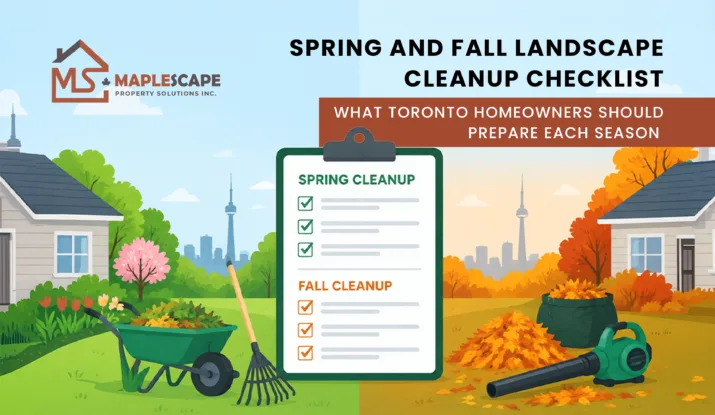
The landscape does not become messy overnight. It happens gradually.
Leaves collect around garden beds. Winter leaves behind broken branches and debris. Plants become overgrown. Soil becomes compact. Small issues that were easy to ignore slowly affect how the entire outdoor space looks and functions.
That is why seasonal cleanups in Toronto are more than just making a yard look tidy. They help prepare the landscape for the next growing period, protect plants, and identify problems before they become larger maintenance tasks.
For Toronto and GTA homeowners, seasonal changes are especially important because outdoor spaces experience snow, freezing temperatures, rainfall, heat, and changing plant growth throughout the year.
1. Why Does Seasonal Landscape Cleanup Matter?
The landscape is a living system.
Grass, plants, soil, drainage areas, garden beds, and outdoor structures all respond to seasonal conditions.
A proper cleanup helps with:
- removing organic debris;
- improving airflow around plants;
- preparing soil and garden beds;
- identifying winter damage;
- reducing conditions that encourage pests or disease;
- Keeping outdoor areas safe and usable.
Cleanup is not only about appearance. A neglected landscape can become harder to maintain because small issues accumulate.
A fallen branch can damage plants. Thick leaf layers can trap moisture. Overgrown areas can hide drainage problems or damaged surfaces.
2. What Should Be Included in Spring Landscape Cleanup?
Spring is the recovery season.
After months of snow, cold temperatures, and reduced outdoor activity, the first cleanup helps reveal what the landscape needs.
2.1 Remove Winter Debris
Start by clearing:
- fallen branches;
- leaves left from autumn;
- damaged plant material;
- leftover winter debris;
- accumulated dirt around outdoor areas.
Removing debris allows sunlight and airflow to reach plants and garden beds.
2.2 Inspect Winter Damage
Spring is the best time to identify problems caused by winter conditions.
Check:
- damaged shrubs;
- broken branches;
- lifted edging;
- damaged pathways;
- areas where water collects;
- exposed roots or soil erosion.
Freeze-thaw cycles can affect outdoor surfaces and soil conditions. Early inspection helps determine whether a small correction is enough or whether a larger repair is needed.
2.3 Prepare Garden Beds
Garden beds often need attention after winter.
Typical tasks include:
- removing dead plant material;
- loosening compacted soil;
- adding mulch where required;
- defining bed edges;
- Preparing areas for new planting.
Healthy beds create a better environment for plants throughout the growing season.
3. What Maintenance Is Important During Summer?
Summer is less about major cleanups and more about keeping growth under control.
Toronto summers can bring periods of heat, rainfall changes, and rapid plant growth.
Regular monitoring helps maintain:
- lawn condition;
- garden appearance;
- weed control;
- plant health;
- outdoor usability.
3.1 Monitor Water and Plant Stress
Plants show stress differently.
Look for:
- wilting leaves;
- dry soil;
- yellowing foliage;
- slow growth;
- damaged branches.
The right response depends on plant type, location, soil, and weather conditions.
Overwatering is not always the solution. Poor drainage can create different problems from dry conditions.
3.2 Control Growth Before It Becomes Difficult
Small maintenance tasks are easier when handled regularly.
Examples include:
- removing weeds early;
- trimming overgrown areas;
- checking garden borders;
- clearing debris from pathways.
This reduces the amount of work needed during larger seasonal maintenance periods.
4. Why Is Fall Cleanup Important Before Winter?
Fall preparation is often the most important seasonal step because it protects the landscape during the months when it receives the most stress.
4.1 Remove Leaves and Organic Buildup
A thick layer of leaves can trap moisture and create problems in lawns and garden beds.
Fall cleanup typically focuses on:
- leaf removal;
- clearing pathways;
- removing dead annual plants;
- cleaning around outdoor structures.
Organic material is useful in the right place, but excessive buildup in unwanted areas can affect lawn and plant health.
4.2 Prepare Plants and Beds for Cold Weather
Not every plant needs the same preparation.
Depending on the landscape, fall tasks may include:
- cutting back certain plants;
- protecting sensitive areas;
- applying mulch where appropriate;
- Checking soil conditions.
The right approach depends on plant variety and local conditions.
4.3 Check Drainage Before Snow Arrives
Fall is also a good time to inspect water movement.
Look at:
- downspout discharge areas;
- pathway edges;
- low spots;
- garden bed drainage.
Water problems become more difficult to address once winter conditions arrive.
5. How Often Should Homeowners Schedule Seasonal Cleanups?
There is no single schedule for every property.
A small yard with limited planting may need less attention than a larger property with:
- mature trees;
- extensive garden beds;
- multiple outdoor surfaces;
- decorative landscaping;
- drainage challenges.
Many homeowners plan around the two major transition periods:
Spring: preparing the property after winter.
Fall: protecting the landscape before winter.
Additional maintenance during summer helps keep those larger cleanup periods manageable.
6. Can Seasonal Cleanup Prevent Larger Landscaping Problems?
It can help identify problems early.
For example:
- A small drainage issue may be noticed before it affects plants.
- Damaged edging may be repaired before sections shift.
- Weak branches may be removed before storms create damage.
- Overgrown areas may be corrected before they affect pathways.
Preventative care does not eliminate every repair, but it creates opportunities to address issues before they become more complicated.
For homeowners who want a structured approach, seasonal cleanups can become part of a wider landscape maintenance plan rather than an occasional emergency task.
Maple Scape supports Toronto and GTA homeowners with outdoor maintenance needs, including seasonal landscape care, cleanup, and ongoing property upkeep.
7. What Should Homeowners Include a Seasonal Cleanup Checklist?
A practical checklist includes:
Spring
- Remove winter debris
- Inspect plants for damage
- Clean pathways and outdoor areas
- Prepare garden beds
- Check drainage conditions
Summer
- Monitor plant health
- Control weeds
- Maintain lawn areas
- Check irrigation needs
- Trim overgrowth
Fall
- Remove leaves
- Clear garden debris
- Prepare plants
- Inspect drainage
- Protect outdoor areas before winter
The checklist should adapt to the property rather than becoming a fixed routine.
Frequently Asked Questions
When is the best time for spring cleanup in Toronto?
Spring cleanup is usually done after snow has melted, and the landscape can be properly inspected. Timing depends on the weather and ground conditions.
Are seasonal cleanups only about removing leaves?
No. They also include plant care, debris removal, inspections, garden preparation, and identifying outdoor issues.
How often should a landscape be cleaned professionally?
It depends on property size, plant coverage, tree density, and maintenance expectations. Many properties benefit from major springs and fall attention.
Can leaves damage my lawn?
A thick layer of leaves can block light and trap moisture. Removing excessive buildup helps maintain healthier lawn conditions.
Should every plant be cut back before winter?
No. Plant requirements vary. Some benefit from winter preparation while others should remain intact until spring.