
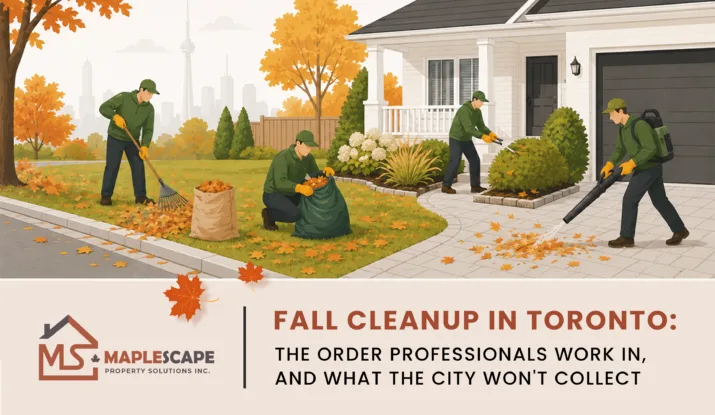
A good fall cleanup is not one giant rake-and-bag session. For seasonal cleanups in toronto, professionals work in passes: inspect the property, separate waste streams, clear beds and hard surfaces, manage the lawn, complete the final mow, then stage accepted material for collection. Toronto, Markham, Vaughan and Richmond Hill have different 2026 yard-waste rules, so disposal planning matters before work begins.
Table of Contents
- Introduction
- Seasonal Cleanups in Toronto Start With the Right Order
- Pass One: Inspect, Sort and Decide What Leaves
- Pass Two: Clear Beds, Borders and Hard Surfaces
- Pass Three: Finish the Lawn Without Overworking It
- What Will Toronto-Area Municipalities Collect in 2026?
- Pass Four: Detail, Bag and Stage the Property
- Conclusion
- Frequently Asked Questions
1. Introduction
Fall cleanup looks simple until leaves are wet, branches are mixed with soil, the lawn still needs mowing, and several bags are sitting at the curb in the wrong container.
You know what makes the biggest difference on a fall property? Sequence.
A professional crew does not start wherever the first pile appears. The property is worked in stages so cleaned areas are not repeatedly covered.
Municipal rules add another layer because GTA collection windows and accepted materials differ in 2026.
2. Seasonal Cleanups in Toronto Start With the Right Order
The efficient workflow is generally top to bottom and clean to dirty.
Branches and loose debris come before detailed lawn work. Beds and hard surfaces are cleared before the last lawn pass. Bagging happens after material has been separated into what the municipality accepts and what needs another disposal route.
Otherwise, you mow first and then blow leaves from the beds straight back onto the finished lawn.
3. Pass One: Inspect, Sort and Decide What Leaves
Before the blower starts, walk the property.
Identify heavy leaf pockets, fallen limbs, wet areas, overgrown turf and anything that should not enter the municipal yard waste stream. Separate ordinary plant material from soil, sod, stones, construction debris or oversized wood.
3.1 Do Not Treat Every Fallen Leaf as Garbage
A clean property does not have to mean a biologically empty property.
Toronto encourages residents to consider leaving some fallen leaves and branches for overwintering pollinators. Vaughan gives similar fall guidance. In suitable garden areas, a light natural layer can provide pollinator habitat instead of becoming another bag at the curb.
The balance is simple: clear slippery walkways, thick mats on turf and drainage areas, while letting selected protected beds keep some leaves.
4. Pass Two: Clear Beds, Borders and Hard Surfaces
Now work outward from planting beds, fence lines, patios and walkways.
Leaves beneath shrubs or against edging are loosened first. Hard surfaces come next. Material then moves onto the lawn or one collection point for a controlled pickup.
That order is what makes seasonal cleanups in Toronto efficient rather than repetitive.
4.1 Why Professionals Avoid Random Piles
Multiple piles mean repeated handling. A planned route also makes sorting easier.
Keep:
- loose leaves and garden material together
- suitable twigs separate for branch bundles
- soil, stones and rejected material out of municipal bags
The point is not speed alone. It is preventing one waste stream from contaminating another.
5. Pass Three: Finish the Lawn Without Overworking It
Once beds and hard surfaces are clear, the lawn becomes the final working surface.
Leaves can be removed, mulched where appropriate, or collected. If turf has genuinely excessive thatch, dethatching may fit into early-fall renovation. Penn State cautions against dethatching in late fall because damaged turf may not recover adequately before winter.
5.1 The Final Cut Follows Growth, not a Calendar Date
Keep mowing while grass is actively growing rather than declaring one universal last-mow date.
University of Minnesota guidance says a slightly shorter final height can be useful going into winter, but not below two inches. The aim is not to scalp the lawn. It is to leave manageable turfgrass that will not mat heavily under snow.
The last pass can also chop light leaf litter while leaving the root zone undisturbed.
6. What Will Toronto-Area Municipalities Collect in 2026?
This is where cleanup planning gets surprisingly specific.
| Municipality | 2026 Fall Collection | Important “Won’t Collect” Examples |
| Toronto | Every other week on garbage day, generally through mid-December | Grass clippings, sod, soil, wood over 7.5 cm diameter, pet waste |
| Markham | Every other week through October 30 | Grass/thatch clippings, sod, dirt, gravel, cement, topsoil, rocks |
| Vaughan | Biweekly through October 9, then weekly fall collection by zone/day | Stumps, root balls, soil, rocks, stones |
| Richmond Hill | Weekly October 13 through December 11 | Soil, sod, grass clippings |
Toronto requires Kraft paper bags or acceptable rigid open-top containers, not plastic bags or cardboard boxes. Markham uses similar rules and limits bags, containers and bundles to under 18 kilograms. Richmond Hill also limits each item to 18 kilograms.
Vaughan requires Kraft bags or marked open-top containers and specifies branch-bundle dimensions. Its 2026 calendar shows weekly fall collection in October and November by collection zone.
7. Pass Four: Detail, Bag and Stage the Property
Only after the major cleanup should the crew return for details.
Check edges, lift remaining leaves from corners, blow walkways clean and bag accepted material without overloading. Rejected material goes to the appropriate disposal route.
Then comes curbside collection timing.
All four municipalities restrict how early yard material should be placed out. That matters for hired crews because finishing a property days before collection does not mean bags belong at the curb.
Good Property Maintenance Toronto service should account for the municipal schedule, not leave the homeowner with a clean lawn and a disposal problem.
8. Conclusion
The best seasonal cleanups in Toronto are organized around order.
Inspect first. Sort before bagging. Clear beds and hard surfaces before finishing the lawn. Dethatch only when turf needs it and early enough to recover. Complete the final mow according to growth, then package material according to current municipal rules.
Maple scape Property Solutions provides fall cleanup, lawn care, grass cutting and related seasonal maintenance across Toronto and the GTA. A good cleanup should leave both the property and the disposal plan finished.
Frequently Asked Questions
Does Toronto Collect Grass Clippings as Yard Waste?
No. Toronto asks residents to leave grass clippings on the lawn or compost them rather than place them in yard waste.
When Does Markham Stop Yard-Waste Collection in 2026?
Markham’s 2026 curbside yard-material program runs every other week through October 30.
Does Richmond Hill Collect Yard Waste Weekly in Fall 2026?
Yes. Richmond Hill lists weekly collection from October 13 through December 11, 2026.
Should Every Lawn Be Dethatched During Fall Cleanup?
No. Dethatching is for excessive buildup and should be timed while cool-season grass can recover, not automatically added to every cleanup.
Should Leaves Be Removed From Every Garden Bed?
No. Where safety, drainage and plant health allow, leaving some leaves can provide winter habitat. Thick mats on lawns, paths and problem areas can still be removed.