A backyard upgrade often starts with a simple thought: “I want to make better use of this space.”
The challenge comes when homeowners begin planning. Should you create a patio for outdoor living? Add a walkway to improve movement around the property? Build a retaining wall to solve a slope or drainage issue?
Each feature serves a different purpose.
For homeowners exploring Landscaping Services toronto, the best outdoor spaces are not built by adding the most features. They are planned around how the yard is used, how water moves, how the property is shaped, and how much maintenance the homeowner wants over time.
1. What Is the Difference Between Hardscape Features?
Hardscaping refers to the non-living elements of a landscape.
This includes:
- patios;
- walkways;
- retaining walls;
- steps;
- edging;
- outdoor structures.
Unlike plants, these features create permanent structures in the yard.
That means decisions made during planning affect how space functions for years.
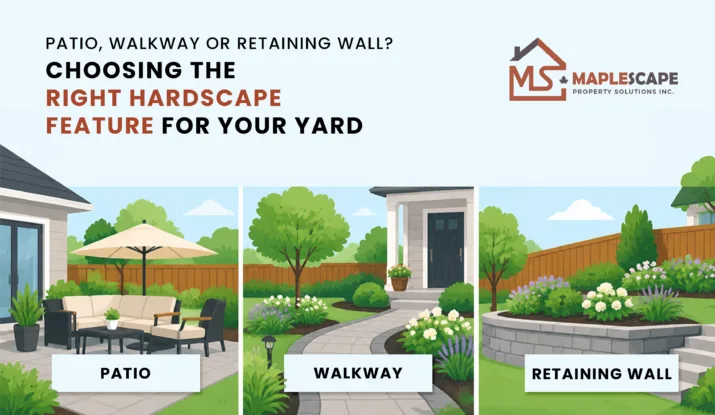
A patio changes how you use the yard. A walkway changes how you move through it. A retaining wall changes how the land itself is supported.
Choosing the right feature starts with understanding the problem you want to solve.
2. When Does a Patio Make the Most Sense?
A patio is usually the right choice when the goal is creating an outdoor living area.
Homeowners often add patios for:
- outdoor dining;
- seating areas;
- entertaining;
- fire features;
- relaxing spaces;
- connecting indoor and outdoor areas.
2.1 What Should You Consider Before Building a Patio?
A good patio design considers more than available space.
Think about:
- sunlight throughout the day;
- proximity to the home;
- drainage patterns;
- furniture placement;
- privacy;
- walking routes;
- future maintenance.
A patio that looks attractive but collects water or blocks of movement may become frustrating.
The foundation underneath also matters. The surface is only one part of the system. Proper preparation, grading, and base installation influence long-term performance.
3. When Is a Walkway a Better Investment?
Walkways solve movement problems.
They create defined routes between:
- the driveway and entrance;
- the patio and garden;
- the backyard and side access;
- different outdoor zones.
A well-designed walkway can make a yard feel more organized while protecting lawn and planting areas from repeated foot traffic.
3.1 What Makes 3a Good Walkway Design?
The best walkway is not always the shortest one.
Consider:
- natural movement patterns;
- comfortable width;
- surface stability;
- drainage;
- connection points;
- seasonal conditions.
A narrow path may look efficient on paper but feel uncomfortable when carrying bins, gardening equipment, or outdoor furniture.
The material also matters. Different surfaces provide different levels of maintenance, texture, appearance, and durability.
4. When Do You Need a Retaining Wall?
Retaining walls solves a different type of problem.
They are commonly used where a property has:
- slopes;
- changing elevations;
- soil movement concerns;
- garden level changes;
- drainage challenges.
A retaining wall is not simply a decorative border. It holds soil and manages pressure created by the landscape behind it.
4.1 Why Is Planning More Important with Retaining Walls?
The visible wall is only the surface component.
A properly planned to retain wall considers:
- soil conditions;
- drainage;
- water pressure;
- wall height;
- base preparation;
- surrounding landscape.
Poor drainage is one of the common reasons for retaining walls to experience movement.
Water adds pressure behind the wall, which can affect stability over time.
5. How Do You Decide Which Hardscape Feature Your Yard Needs?
Start with the purpose, not the material.
Ask:
Do you need a place to spend time?
A patio may be the right choice.
Do you need easier movement around the property?
A walkway may solve the problem.
Do you need to manage elevation or soil?
A retaining wall may be required.
Many successful landscapes combine all three.
For example:
- a retaining wall creates usable levels;
- a walkway connects different areas;
- a patio becomes the main outdoor living zone.
The strongest designs make each feature support the others.
6. What Mistakes Do Homeowners Make When Planning Hardscaping?
6.1 Choosing Appearance Before Function
The material may look attractive but still unsuitable for the location.
Consider:
- drainage;
- weather exposure;
- maintenance needs;
- daily use.
6.2 Ignoring Water Movement
Water affects almost every outdoor construction decision.
Poor planning can lead to:
- pooling;
- erosion;
- shifting surfaces;
- damaged landscaping.
Understanding where water naturally moves through the property should happen before installation begins.
6.3 Building Without Considering Future Maintenance
A beautiful landscape should still be practical.
Think about:
- cleaning;
- snow removal;
- plant growth;
- access;
- Repairs.
A design that requires constant attention may become difficult to enjoy.
7. How Do Landscaping Services Help with Hardscape Planning?
Professional planning is not only about installation.
It helps connect different parts of the property:
- the home’s architecture;
- existing grades;
- drainage;
- plants;
- outdoor usage;
- Maintenance requirements.
Maple Scape’s landscaping services help homeowners plan and improve outdoor spaces across Toronto and the GTA by considering both appearance and practical property needs.
A well-planned project can also reduce future repairs because decisions about grading, materials, and layout are made before construction begins.
8. Patio, Walkway or Retaining Wall: Quick Comparison
| Feature | Best For | Main Planning Consideration |
| Patio | Outdoor living and entertaining | Space, drainage, foundation |
| Walkway | Better movement and access | Route, width, surface stability |
| Retaining Wall | Slopes and elevation changes | Soil, drainage, structural support |
There is no universally better option.
The right choice depends on what your yard needs.
Frequently Asked Questions
Is a patio or walkway more valuable for a backyard?
It depends on how you use the space. Patios improve outdoor living, while walkways improve access and organization.
Do retaining walls only solve slope problems?
No. They can also help define garden levels, manage elevation changes, and organize landscape areas when properly designed.
Does hardscaping require drainage planning?
Yes. Water movement affects patios, walkways, and retaining walls. Proper grading and drainage help protect the installation.
Which hardscape feature requires the most planning?
Retaining walls usually requires the most structural consideration because they manage soil pressure and water movement.
Can I combine patios, walkways, and retain walls together?
Yes. Many complete landscape designs combine multiple features to create functional outdoor spaces.