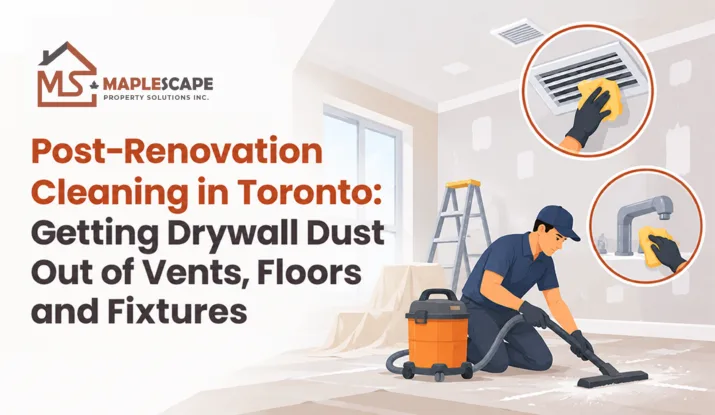
Post-renovation cleaning removes fine drywall dust, construction debris, and leftover residue from vents, floors, fixtures, and hidden corners. Professional deep cleaning services Toronto homeowners choose can help restore clean, comfortable living spaces after renovation work. The most effective approach combines HEPA vacuuming, careful surface wiping, and a final room-by-room inspection.
Table of Contents
- Why Does Drywall Dust Spread Throughout Your Home?
- What Does Post-Renovation Deep Cleaning Include?
- How Do You Remove Drywall Dust from Air Vents?
- What Is the Best Way to Clean Floors After Renovation?
- How Should You Clean Fixtures, Cabinets and Other Surfaces?
- What Cleaning Equipment Works Best for Construction Dust?
- When Should You Schedule Post-Renovation Cleaning?
- How Do You Know Your Home Is Ready to Use?
- Conclusion
- Frequently Asked Questions
Introduction
Finishing a home renovation feels exciting. Your freshly painted walls, updated kitchen, or new flooring finally bring your vision to life.
However, renovation work often leaves fine dust across surfaces you might not notice immediately. You may find a light white coating on window frames, inside cabinets, or around air vents.
Regular household cleaning may remove visible dirt, but renovation residue requires a more detailed approach.
With professional deep cleaning services Toronto, you can address these hidden areas and enjoy your newly renovated space with greater comfort.
Let’s explore where drywall dust settles, how to remove it properly, and what your final cleaning checklist should include.
1. Why Does Drywall Dust Spread Throughout Your Home?
Drywall dust spreads easily because sanding and cutting create tiny particles that move through the air and settle on nearby surfaces.
During renovations, contractors often cut drywall panels, apply joint compound, and sand surfaces to create smooth walls.
These activities generate fine powder that can travel beyond the immediate work area.
Where Does Construction Dust Usually Collect?
You may find renovation dust in places such as:
- Air vents and return grilles.
- Window tracks and door frames.
- Baseboards and floor corners.
- Cabinet shelves and drawers.
- Light fixtures and ceiling fans.
- Furniture, countertops, and appliances.
Some particles also settle inside carpet fibres and along flooring edges.
Effective construction dust cleaning focuses on these less obvious areas instead of concentrating only on visible floors.
Why Is Ordinary Dusting Not Enough?
Ordinary dry dusting can send fine particles back into the air.
The Canadian Centre for Occupational Health and Safety recommends suitable vacuuming and damp cleaning methods to reduce airborne dust during cleanup.
Choose a cleaning method that captures dust rather than moving it between surfaces.
2. What Does Post-Renovation Deep Cleaning Include?
A thorough post-renovation cleanup removes loose debris, collects fine dust, cleans accessible surfaces, and prepares the home for everyday activities.
Professional deep cleaning services Toronto should follow a clear checklist that matches your renovation work.
| Area | Recommended cleaning method |
| Floors | HEPA vacuuming and suitable damp cleaning |
| Air vent covers | Careful vacuuming and wiping |
| Walls and ceilings | Gentle dust removal |
| Cabinets and drawers | Interior and exterior wiping |
| Windows and tracks | Dust extraction and glass cleaning |
| Fixtures and switches | Careful surface cleaning |
| Baseboards and corners | Detailed vacuuming and wiping |
Why Should You Clean from Top to Bottom?
Cleaning from the highest surfaces downward helps prevent loose dust from settling onto areas you have already finished.
Start with accessible ceiling edges, high shelves, and light fixtures.
Continue toward walls, cabinets, countertops, and baseboards.
Finish with the flooring, where remaining particles naturally collect.
You can also explore Maplescape’s move-in and move-out cleaning services for detailed property cleaning support.
3. How Do You Remove Drywall Dust from Air Vents?
You can remove drywall dust from accessible vent covers with a suitable HEPA vacuum and careful wiping, while a qualified HVAC professional should handle significant contamination inside ductwork.
Your home’s heating, ventilation, and air conditioning system moves air through supply and return ducts.
During renovations, uncovered openings may allow dust to enter this system.
How Should You Clean Vent Covers?
Follow these steps:
- Switch off the HVAC system before cleaning accessible vent covers.
- Use a suitable HEPA vacuum attachment to collect loose dust.
- Remove detachable grilles when the manufacturer’s instructions allow it.
- Clean the covers with an appropriate damp cloth.
- Dry the covers completely before reinstalling them.
- Check the HVAC filter and replace it when necessary.
Avoid pushing cleaning tools deep into the ductwork.
When Do You Need Professional Duct Cleaning?
Consider an HVAC inspection when you notice substantial debris inside ducts, renovation-related airflow problems, or dust repeatedly emerging from vents.
The US Environmental Protection Agency recommends protecting HVAC openings during renovation work to limit contamination.
Surface vent cleaning and internal duct cleaning involve different tasks. Confirm whether your cleaning provider handles only accessible covers or also coordinates specialist duct services.
4. What Is the Best Way to Clean Floors After Renovation?
The best way to clean renovation dust from floors is to remove loose particles with a suitable HEPA vacuum before using a cleaning method appropriate for the flooring material.
For post renovation cleaning toronto homeowners should pay particular attention to floor edges, corners, and areas near newly renovated walls.
How Should You Clean Different Flooring Types?
- Hardwood: Use a soft-floor attachment and a lightly dampened cloth or mop that suits the finish.
- Laminate: Vacuum thoroughly and use minimal moisture according to the manufacturer’s guidance.
- Tile: Vacuum loose particles, then clean the surface and grout with suitable products.
- Vinyl: Remove dust and follow with a manufacturer-approved floor cleaner.
- Carpet: Use a suitable HEPA vacuum slowly across the area and repeat where necessary.
Should You Mop Immediately?
Start with vacuuming rather than wet mopping.
Fine drywall powder can combine with water and create a cloudy residue across hard flooring.
Once you collect the loose particles, use clean mop pads and change the cleaning water frequently.
Allow surfaces to dry before your final inspection.
5. How Should You Clean Fixtures, Cabinets and Other Surfaces?
Clean fixtures and cabinets with appropriate vacuum attachments, soft cloths, and surface-safe cleaning products.
Fine renovation dust often collects around fittings, hinges, handles, and decorative details.
What Should You Check in Kitchens and Bathrooms?
Focus on these commonly overlooked areas:
- Inside kitchen cupboards and drawers.
- Cabinet handles and door hinges.
- Bathroom faucets and shower fittings.
- Countertop edges and backsplashes.
- Light switches and outlet covers.
- Window sills and sliding tracks.
For electrical fixtures, follow the manufacturer’s cleaning instructions and avoid introducing water into electrical openings.
Can You Wipe Freshly Painted Walls?
Yes, but only after the paint manufacturer allows cleaning.
Fresh paint needs time to develop its final durability. Aggressive wiping may affect the finish before it cures.
Use a soft brush attachment or another manufacturer-approved dry cleaning method when appropriate.
For homeowners planning after renovation cleaning, checking paint and flooring care instructions prevents unnecessary surface damage.
6. What Cleaning Equipment Works Best for Construction Dust?
A properly designed HEPA vacuum, microfiber cloths, suitable cleaning solutions, and basic protective equipment help you remove renovation dust effectively.
HEPA stands for high-efficiency particulate air. A properly sealed HEPA vacuum captures fine particles and limits their release back into the room.
Your Essential Cleaning Checklist
Gather these supplies before starting:
- A suitable HEPA vacuum with attachments.
- Clean microfiber cloths.
- Floor-specific cleaning products.
- A bucket and clean mop pads.
- Protective gloves and suitable respiratory protection.
- Waste bags for loose renovation debris.
Avoid compressed air, dry sweeping, and ordinary household vacuums that lack suitable dust filtration.
Ontario’s construction silica guidance also recommends avoiding dry sweeping and using appropriate dust-control methods.
If your renovation involved cutting concrete, removing older coatings, or disturbing potentially hazardous building materials, ask a qualified professional to assess the contamination before ordinary cleaning.
7. When Should You Schedule Post-Renovation Cleaning?
Schedule your detailed cleanup after contractors finish dust-producing work and remove their tools, loose materials, and major construction debris.
This timing gives your cleaning team access to walls, floors, cabinets, and fixtures.
What Is the Recommended Cleaning Order?
Use this simple sequence:
- Confirm that contractors have finished cutting and sanding.
- Arrange removal of large construction debris.
- Complete initial HEPA vacuuming.
- Clean upper surfaces, fixtures, and accessible vents.
- Clean cabinets, counters, and floors.
- Inspect the property for remaining dust.
A larger renovation may benefit from an initial cleanup followed by a final detail visit.
Professional after renovation cleaning works best when cleaners can reach every surface before you return furniture and belongings.
8. How Do You Know Your Home Is Ready to Use?
Your home is ready for normal use when the cleanup removes visible renovation residue, surfaces feel clean, and any necessary specialist safety checks confirm suitable conditions.
Before completing post renovation cleaning toronto property owners should inspect the areas most likely to collect fine particles.
Your Final Walkthrough Checklist
Check the following:
- Run a clean cloth along accessible baseboards.
- Inspect cabinets and drawers with good lighting.
- Look inside window tracks.
- Check accessible vent covers.
- Examine flooring edges and corners.
- Review countertops and fixtures.
- Confirm that your HVAC system operates normally.
If you notice remaining dust, repeat the appropriate cleaning steps.
A visual inspection helps identify ordinary residue, but it cannot confirm the absence of hazardous particles. Arrange professional testing when the renovation involved suspected asbestos, lead, or other hazardous materials.
Conclusion: Enjoy Your Renovated Home with Maplescape
A successful renovation deserves a clean and welcoming finish.
Removing drywall dust from vents, floors, cabinets, and fixtures helps you appreciate your improvements without leftover construction residue.
The right construction dust cleaning plan combines suitable equipment, careful cleaning techniques, and a thorough final inspection.
Maplescape provides property cleaning and maintenance services across Toronto and the GTA, helping homeowners, landlords, and property managers prepare spaces for comfortable use.
If you need deep cleaning services Toronto for your newly renovated property, discuss the renovation-specific scope, equipment, and any specialist cleaning requirements with the team before booking.
Ready to enjoy your refreshed space? Contact Maplescape to discuss your cleaning needs and request a personalized quote.
Frequently Asked Questions
How long does post-renovation cleaning take?
Cleaning time depends on your property’s size, renovation scope, and the amount of dust remaining. A small room may require several hours, while extensive renovations can require multiple cleaning visits.
Can drywall dust damage my vacuum cleaner?
Fine drywall dust can clog filters and affect vacuums that lack suitable filtration. Use equipment specifically designed for fine construction dust, preferably a properly sealed HEPA vacuum.
Do I need professional air duct cleaning after renovation?
Not every renovation requires complete duct cleaning. If significant debris entered your HVAC system, ask a qualified HVAC professional to inspect the ducts and recommend appropriate action.
Is it safe to sleep in a room immediately after renovation cleaning?
You can generally resume normal use after suitable cleaning, adequate ventilation, and completion of relevant paint or product curing requirements. Seek professional clearance first if the renovation involved potentially hazardous materials.
Does Maplescape provide cleaning services for newly renovated properties?
Maplescape offers detailed property cleaning services across Toronto and surrounding GTA communities. Contact its team to confirm whether it can accommodate your renovation-specific dust removal, surface cleaning, and scheduling requirements.