
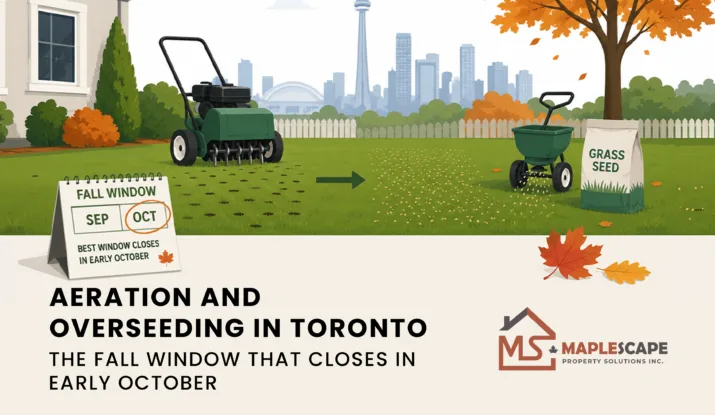
For homeowners planning lawn maintenance Toronto, fall aeration and overseeding work best when timed for active turf recovery. September is usually the safer window because soil remains warm while air temperatures cool. By early October, germination and establishment time become tighter, especially for slower grasses, so waiting reduces the margin for success.
Table of Contents
- Introduction
- Why September Matters for Lawn Maintenance Toronto
- When Aeration Is Actually Worth Doing
- How Aeration and Overseeding Work Together
- The Best Fall Sequence for Toronto Lawns
- What Happens If You Miss the Window?
- Conclusion
- Frequently Asked Questions
1. Introduction
A tired lawn after summer is common. Grass may look thin near a walkway; water may sit after rain, or months of foot traffic and heat may have taken a toll.
Fall gives homeowners a useful opportunity to repair weak areas before winter.
But aeration and overseeding are not automatic annual chores. They work best when the lawn needs them and when seedlings have enough time to establish. The City of Toronto recommends aerating when the ground is slightly moist in spring or fall, while turf specialists generally place cool-season seeding in late summer to early fall.
2. Why September Matters for Lawn Maintenance Toronto
Ontario turf guidance identifies mid-August to mid-September as the preferred seeding period, with conventional seeding extending to the end of September. Cool-season grasses can germinate while soils remain relatively warm without facing peak summer heat. Landscape Ontario similarly identifies mid-August through September as the stronger fall establishment period.
2.1 Why Warm Soil and Cooler Air Help
Seed needs moisture, suitable temperature, and direct contact with soil. Cooler fall conditions also support turf recovery.
You know what often gets missed? Different grasses move at different speeds. Perennial ryegrass can germinate quickly, while Kentucky bluegrass may take around two weeks or longer. Fine fescue has different site preferences again. The calendar matters more when a mix contains slower-establishing species.
2.2 Is Early October Really Too Late?
No. Toronto climate normals show first fall frost can arrive later in autumn. The real issue is the shrinking germination window.
Environment and Climate Change Canada’s 1991–2020 Toronto City normals place the average first fall frost in November, although earlier frost remains possible. So, an early-October cutoff is better understood as a practical establishment deadline, not a date when seed suddenly stops working.
Seed applied later has fewer favorable days to germinate, develop roots and build strength before cold conditions slow growth. That is why overseeding Toronto lawns is usually a September decision.
That extra time can make establishment more reliable before temperatures fall and growth slows.
3. When Aeration Is Actually Worth Doing
Aeration is most useful when soil compaction limits the lawn. Removing plugs creates openings that help air, water and nutrients reach roots. The City of Toronto specifically recommends plug aeration to improve movement of rain, air and nutrients into the root zone.
So let me put it simply: a healthy, lightly used lawn may not need annual aeration. If the ground feels hard, water infiltration is poor or the same routes are constantly walked on; lawn aeration Toronto may be worth considering.
3.1 Signs Your Lawn May Benefit
Look for patterns rather than one isolated symptom:
- heavily used paths where grass stays thin
- hard ground that is difficult to penetrate when moist
- puddling or slow water movement after rain
- compacted areas around play zones, gates or walkways
Penn State and Illinois Extension recommend hollow-tine or core aeration for compacted cool-season turf while grass is actively growing, and soil has enough moisture for tines to penetrate.
4. How Aeration and Overseeding Work Together
Aeration addresses the soil environment. Overseeding addresses thin turf. Openings created during aeration can improve seed-to-soil contact, which supports germination. Penn State also stresses that successful overseeding depends on seed reaching the soil rather than sitting above established turf.
For lawn maintenance Toronto, that does not mean spreading seed over every aerated lawn. Overseeding is most useful when existing grass has become thin enough that greater turf density is genuinely needed.
4.1 Choose Seed for the Site, Not the Bag
Seed choice should match light, moisture, traffic and maintenance conditions rather than follow one standard mixture.
This is where lawn care services Toronto should add value. A useful assessment asks why grass is thin before recommending more seeds. If deep shade, drainage, or constant traffic is the real problem, seed alone may only provide temporary improvement. University extension guidance likewise recommends matching grass mixtures to sunlight, traffic and expected maintenance.
4.2 Moisture After Seeding Matters
Once the seed is down, the surface needs consistent moisture. University of Minnesota guidance recommends keeping the soil surface slightly damp, not soaked, until varieties in the mixture have germinated.
That is why lawn care and maintenance after overseeding matters as much as application day. A well-timed job can still underperform if the seedbed repeatedly dries out.
5. The Best Fall Sequence for Toronto Lawns
So, what does a sensible fall lawn renovation look like? Think in a sequence.
- Inspect the lawn. Identify compaction, thin areas, shade, drainage and heavy traffic.
- Mow appropriately. Keep grass manageable so seeds can reach soil without scalping turf.
- Aerate if needed. Work when soil is slightly moist, not saturated or hard.
- Overseed thin areas. Use a mixture suited to the site and distribute it evenly.
- Protect establishment. Keep the surface moist and limit unnecessary traffic.
Each step creates better conditions for establishment. Illinois Extension and Minnesota Extension both emphasize moisture, active growth and good soil contact when renovating established turf.
6. What Happens If You Miss the Window?
If it is already well into October, conventional overseeding becomes less predictable. Mild weather can continue, but seedlings have less time to establish before growth slows.
Dormant seeding is a separate strategy where seed is applied late enough that it does not germinate immediately and instead waits for suitable conditions later. It is not the same as seeding late and hoping for the best. The University of Minnesota treats dormant seeding as its own establishment method for cool-season turf.
A professional assessment can help decide whether to wait until spring, consider dormant seeding or focus on other fall tasks. Missing the ideal window does not mean the season is wasted. It changes the decision.
7. Conclusion
Good lawn maintenance Toronto is not about checking aeration and overseeding off a list. It is about matching treatment to lawn conditions and giving new grass enough time to establish.
September is usually the stronger planning window. Aerate where compaction exists, overseed where turf is thin, keep moisture consistent and do not delay simply because October still feels mild.
Maple scape Property Solutions provides lawn care, grass cutting, landscaping and seasonal property maintenance across Toronto and the GTA. Fall is a useful time to assess what your lawn needs now and what can wait until spring.
Frequently Asked Questions
What Is the Best Time to Aerate a Lawn in Toronto?
Spring and fall are suitable, but fall is useful when cool-season grass is actively growing. Slightly moist soil helps hollow tines remove plugs effectively.
What Is the Best Month for Overseeding in Toronto?
September is generally the safer fall target. Ontario guidance favors the period from mid-August through September, giving young grass more establishment time before colder conditions arrive.
Can I Aerate and Overseed on the Same Day?
Yes. They are commonly paired because aeration creates openings that can help seed reach soil. First confirm that both treatments are actually needed.
Is October Too Late to Overseed a Toronto Lawn?
Early October is not an automatic failure date, but establishment time is reduced. Later seeding leaves fewer favorable growing days before cold weather slows turf development.
Should I Water After Overseeding in Fall?
Yes. Keep the seedbed consistently moist during germination without saturating it. As seedlings establish, watering can gradually become less frequent and deeper.