Choosing a driveway or walkway surface is not only an appearance decision.
Toronto homeowners need to think about winter movement, maintenance, repair options, drainage, budget, and how the surface will be used every day.
A smooth new surface may look perfect on installation day, but the better question is how it performs after years of rain, snow, freeze-thaw cycles, vehicle traffic, and seasonal changes.
For homeowners planning outdoor construction, the right choice depends less on which material is “best” and more on which material fits the property, usage, and maintenance expectations.
1. What Are the Main Differences Between Interlock, Concrete and Asphalt?
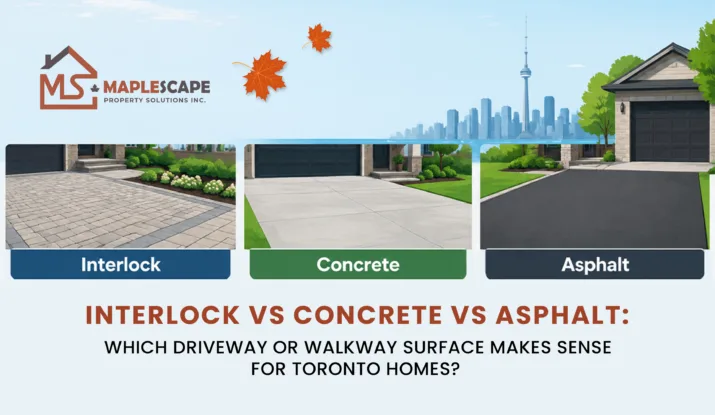
Each surface has strengths and limitations.
| Surface | Best Known For | Main Advantage | Common Challenge |
| Interlock pavers | Patios, walkways, premium driveways | Repairability and design flexibility | Joint maintenance and possible movement |
| Concrete | Driveways, walkways, clean modern surfaces | Solid continuous appearance | Cracking can be difficult to blend |
| Asphalt | Driveways and practical surfaces | Lower upfront cost and smooth finish | Requires maintenance and resurfacing over time |
The installation quality often matters as much as the material itself.
A well-prepared base, proper drainage, correct slope, and suitable installation methods help all three surfaces perform better.
A poor foundation can create problems regardless of what sits on top.
2. How Does Interlock Perform in Toronto Winters?
Interlock is made from individual pavers installed over prepared layers rather than one continuous slab.
That design creates one major advantage: repairability.
If one paver cracks, stains, or settles, the damaged unit can often be removed and replaced without disturbing the entire surface.
2.1 Strengths of Interlock
Interlock works well for homeowners who value:
- design flexibility;
- patterns and color choices;
- individual repairs;
- walkway and patio customization;
- integration with landscaping.
Because the surface consists of separate units, small areas can often be adjusted without rebuilding everything.
This makes interlock attractive for properties where long-term maintenance matters.
2.2 What Should Homeowners Watch For?
Interlock is not maintenance-free.
Common issues include:
- weeds between joints;
- missing joint sand;
- uneven sections;
- movement after freeze-thaw cycles;
- drainage-related settlement.
The pavement depends on the relationship between pavers, joint material, edge restraints, and the supporting base.
Regular inspection and maintenance are important.
For homeowners considering landscape design services, interlock also offers flexibility because it can connect pathways, patios, gardens, and outdoor living areas into one design.
3. How Does Concrete Perform in Toronto Weather?
Concrete creates a clean, continuous surface that many homeowners prefer for modern designs and simple maintenance.
It works well for:
- walkways;
- steps;
- driveways;
- Clean architectural styles.
3.1 Strengths of Concrete
Concrete offers:
- a solid surface;
- fewer joints than interlock;
- a wide range of finishes;
- straightforward cleaning.
Stamped and decorative concrete can also create patterns that resemble other materials while keeping a continuous surface appearance.
3.2 What Are the Challenges?
Concrete moves with temperature changes.
Freeze-thaw cycles can contribute to cracking, especially when water enters small imperfections and freezes.
Repair decisions can also be more complicated.
A damaged interlock paver can often be replaced individually. A cracked concrete slab may require crack repair, resurfacing, or replacement depending on the severity and location.
Small cracks are not always a failure. Concrete natural experiences of movement. The important question is whether cracking is stable, expanding, uneven, or affecting function.
4. Is Asphalt a Good Choice for Toronto Driveways?
Asphalt remains a popular driveway material because it provides a practical surface at a generally lower initial cost than many decorative options.
4.1 Strengths of Asphalt
Benefits include:
- smooth driving surface;
- quick installation compared with some alternatives;
- lower upfront investment;
- easier snow removal.
For homeowners focused mainly on driveway function rather than decorative appearance, asphalt can be a practical choice.
4.2 What Maintenance Does Asphalt Need?
Asphalt performs better when maintained.
Common maintenance includes:
- crack filling;
- sealcoating where appropriate;
- addressing drainage issues;
- repairing damaged areas.
Ignoring small cracks can allow water penetration, which may worsen damage through seasonal cycles.
Asphalt is not maintenance-free, but regular care can extend its useful life.
5. Which Surface Handles Repairs the Best?
Repairability is one of the biggest differences between these materials.
Interlock:
Usually strongest for targeted repairs.
A damaged paver can often be lifted and replaced. Sections can also be re-leveled if movement occurs.
Concrete:
Repairs depend heavily on the type of damage.
A small crack may only require monitoring or sealing. Larger structural cracks or uneven sections may require more extensive work.
Asphalt:
Many issues can be repaired locally, especially cracks and surface damage. However, widespread deterioration may eventually require resurfacing or replacement.
The best surface is not necessarily the one that never needs maintenance. It is the one where maintenance matches your expectations.
6. What Should Toronto Homeowners Consider Before Choosing?
Start with how you use the space.
Driveway:
Think about:
- vehicle weight;
- snow removal;
- drainage;
- parking requirements;
- Maintenance willingness.
Walkway:
Think about:
- appearance;
- accessibility;
- slope;
- connection with landscaping;
- Slip concerns.
Patio:
Think about:
- outdoor furniture;
- entertaining;
- drainage;
- design preferences;
- Future changes.
Also consider the property itself.
A large suburban property may benefit from a different approach than a compact urban yard with limited space.
7. Which Surface Is Cheapest Long-Term?
The answer depends on maintenance expectations.
A cheaper installation does not always mean lower ownership costs.
Consider:
- how often repairs may be needed;
- how easy repairs are;
- whether appearance matters;
- whether you plan to stay long-term;
- How much maintenance do you prefer.
Interlock may require joint maintenance but offers repair flexibility.
Concrete may provide a clean appearance, but larger repairs can be more involved.
Asphalt may offer practical value but requires ongoing maintenance to protect the surface.
The right choice of outdoor construction should balance upfront cost with how the surface will perform over time.
Frequently Asked Questions
Is interlock better than concrete in Toronto?
Not always. Interlock offers easier individual repairs and design flexibility, while concrete provides a continuous surface. The better choice depends on budget, style, use, and maintenance expectations.
Does asphalt last through Toronto winters?
Yes, when properly installed and maintained. Drainage, crack repair, and regular care influence long-term performance.
Which surface is easiest to repair?
Interlock often has an advantage because individual pavers can be removed and replaced. Concrete and asphalt repairs depend on the type and extent of damage.
Does concrete always crack?
No. Concrete movement is normal, but proper preparation, installation, and drainage can influence performance.
Should I choose based only on the lowest installation cost?
No. Consider maintenance, repair options, appearance, and expected use. The cheapest initial option may not always provide the best long-term fit.