
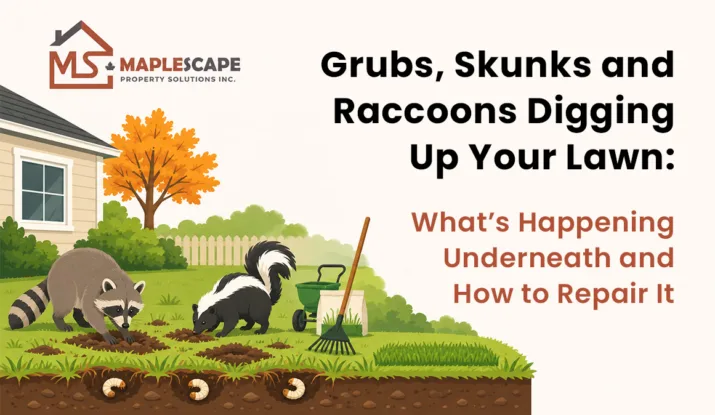
Skunks and raccoons often dig up your lawn because they find white grubs and other insects beneath the grass. These grubs feed on grass roots, while animals searching for them can lift and tear the turf. With timely inspection, suitable grub management, and professional lawn care services toronto homeowners can repair damaged patches and encourage healthy grass growth.
Table of Contents
- Why Are Skunks and Raccoons Digging Up Your Lawn?
- What Are Lawn Grubs and How Do They Damage Grass?
- How Can You Tell Whether Grubs Are Causing Lawn Damage?
- When Are Grubs Most Active in Toronto?
- How Can You Manage Grubs in Your Lawn?
- How Do You Repair a Lawn After Animal Digging?
- How Can You Prevent Future Lawn Damage?
- When Should You Contact a Lawn Care Professional?
- Conclusion
- Frequently Asked Questions
Introduction
You wake up, look outside, and notice small holes or patches of grass scattered across your lawn. Yesterday, everything looked perfectly normal. Now, it seems like something spent the night exploring your backyard.
In many Toronto neighbourhoods, skunks and raccoons visit lawns while searching for insects beneath the surface.
The good news? You can identify what’s attracting these visitors and help your lawn recover with a straightforward maintenance plan.
Understanding the connection between underground pests, animal activity, and grass health helps you choose the right solution. Professional lawn care services toronto homeowners use can also support proper lawn restoration and ongoing maintenance.
1. Why Are Skunks and Raccoons Digging Up Your Lawn?
Skunks and raccoons usually dig through grass to find white grubs, worms, and other insects living near the soil surface.
Your lawn offers a convenient feeding area, particularly when moist soil makes digging easier.
Why Do Skunks Dig Small Holes?
Skunks use their front paws and noses to search for insects just beneath the grass.
You may notice:
- Small, cone-shaped holes scattered across the lawn.
- Several digging spots close together.
- Disturbed soil around otherwise healthy grass.
- More activity after rainfall.
If you notice skunks digging lawn areas repeatedly, inspect the soil for grubs before starting repairs.
Why Do Raccoons Pull Up Larger Sections of Grass?
Raccoons can lift and roll back sections of grass while searching for insects underneath.
Their activity may leave loose turf, larger disturbed patches, and exposed soil.
Both animals contribute to Toronto’s urban wildlife population. Your best approach involves managing the food sources attracting them rather than disturbing the animals.
2. What Are Lawn Grubs and How Do They Damage Grass?
White grubs are beetle larvae that live underground and feed on grass roots.
They have soft, cream-coloured bodies, brown heads, six legs, and a distinctive C-shaped appearance.
Several beetle species produce lawn grubs in Ontario, including Japanese beetles, June beetles, and European chafers.
How Do European Chafer Grubs Affect Toronto Lawns?
European chafer grubs damage grass by feeding on its roots, reducing the lawn’s ability to absorb water and nutrients.
As root damage increases, you may notice yellowing grass, brown patches, or sections that lift easily from the soil.
Adult European chafers generally emerge around early summer. Their larvae begin feeding after hatching and continue developing through the warmer months.
This feeding activity explains why some lawns look healthy in early summer but develop noticeable problems later.
Can Grubs Damage Grass Without Animal Digging?
Yes, grubs can weaken your lawn even when wildlife never visits your property.
Root feeding gradually reduces the connection between grass and soil.
You may first notice patches that resemble dry grass. Checking the roots helps you distinguish possible insect damage from ordinary moisture problems.
3. How Can You Tell Whether Grubs Are Causing Lawn Damage?
You can confirm possible grub activity by carefully lifting a small section of affected turf and inspecting the soil underneath.
Look for these common signs:
| Lawn observation | What it may indicate |
| Small holes across the grass | Animals searching for insects |
| Loose or easily lifted turf | Possible root damage |
| Irregular yellow or brown patches | Root stress, grubs, or other lawn conditions |
| White C-shaped larvae in the soil | White grub presence |
| Birds repeatedly feeding on grass | Possible insect activity |
How Do You Check Your Lawn for Grubs?
Follow these simple steps:
- Choose an area near recent digging or yellowing grass.
- Use a small garden spade to lift approximately one square foot of turf.
- Examine the soil and grass roots for white larvae.
- Count the grubs and photograph what you find.
- Return the grass and gently water the area.
Health Canada identifies approximately eight to ten grubs per square foot as a level that can damage lawns.
However, grub species, grass condition, and moisture also influence the amount of damage. Ask a lawn care professional to assess your findings before choosing treatment.
4. When Are Grubs Most Active in Toronto?
Lawn grubs commonly cause noticeable damage during late summer, autumn, and spring, depending on the beetle species and weather conditions.
For homeowners researching grubs in lawn toronto, understanding seasonal activity makes inspection and treatment planning easier.
Spring: March to May
Overwintering grubs return toward the soil surface as temperatures rise.
They resume feeding on grass roots, and skunks or raccoons may begin searching for them.
Inspect loose turf and areas with noticeable spring thinning.
Summer: June to August
Adult beetles emerge, mate, and lay eggs during their species-specific life cycles.
New larvae begin developing in the soil after hatching.
Late summer provides an important opportunity to inspect your grass for young grubs.
Autumn: September to November
Many grubs continue feeding before colder soil temperatures encourage them to move deeper underground.
You may notice animal digging or weakened grass during this period.
For grubs in lawn toronto, both spring and autumn inspections can help identify recurring activity.
5. How Can You Manage Grubs in Your Lawn?
The most practical approach combines accurate pest identification, healthy lawn maintenance, and suitable control methods when necessary.
Start by confirming whether grubs are actually causing the damage.
Should You Use Beneficial Nematodes?
Beneficial nematodes are tiny organisms that can attack certain soil-dwelling insect larvae.
Some products target white grubs, but their effectiveness depends on the nematode species, grub species, soil moisture, and application timing.
For suitable products:
- Confirm the target grub species.
- Follow the manufacturer’s application instructions.
- Apply under appropriate soil temperature conditions.
- Maintain the recommended soil moisture.
- Check whether the product meets Ontario’s current pesticide requirements.
Ontario restricts cosmetic pesticide use. Before applying any pest control product, confirm its current approval and permitted use through Ontario’s official pesticide guidance.
Can Better Lawn Maintenance Help?
Yes, healthy grass can better tolerate moderate insect feeding and recover from small damaged areas.
A practical maintenance routine includes regular mowing, appropriate watering, overseeding, and occasional aeration when soil compaction requires attention.
You can explore Maplescape’s landscaping and lawn maintenance services to plan ongoing lawn care and outdoor improvements.
6. How Do You Repair a Lawn After Skunk or Raccoon Digging?
You can restore many damaged lawn areas by repositioning loose grass, repairing the soil, and reseeding patches where the original turf cannot recover.
Start repairs after you inspect the area and develop a plan for any active grub problem.
Step 1: Restore Loose Grass
If animals recently lifted healthy turf, gently place the grass back over the soil.
Press it into position to improve contact between the roots and ground.
Water the area lightly and monitor its recovery.
Step 2: Prepare Damaged Soil
Remove loose debris and dead grass from bare patches.
Loosen compacted surface soil and add a thin layer of suitable topsoil where necessary.
Keep the area reasonably level with the surrounding lawn.
Step 3: Overseed Bare Patches
Choose a grass seed blend suitable for Toronto’s climate and your lawn’s sunlight conditions.
Spread the seed according to package instructions and gently rake it into the prepared surface.
Keep the seedbed consistently moist during germination.
Step 4: Consider Sod for Larger Areas
Sod provides an established grass surface when extensive damage makes reseeding less practical.
Healthy soil preparation remains important before installation.
Maplescape’s Toronto landscaping services can help you discuss suitable lawn maintenance and restoration needs.
7. How Can You Prevent Future Lawn Damage?
A healthy lawn and fewer wildlife attractants can reduce the chances of repeated digging.
Focus on these straightforward habits:
- Mow at an appropriate height for your grass type.
- Water deeply when your lawn needs moisture.
- Inspect thinning or loose turf during spring and autumn.
- Remove accessible pet food and fallen fruit.
- Secure garbage and compost containers.
- Monitor areas where animals previously disturbed the grass.
If you notice skunks digging lawn patches repeatedly, check for insects rather than relying only on temporary wildlife deterrents.
You can also use suitable temporary barriers to protect newly repaired areas while grass establishes.
Keep wildlife safety in mind and avoid handling skunks or raccoons directly.
8. When Should You Contact a Lawn Care Professional?
Contact a professional when your lawn has repeated digging, extensive root damage, or bare areas that require restoration.
Professional assessment can help you distinguish grub feeding from drought stress, soil compaction, and other lawn conditions.
Before requesting help, prepare:
- Photographs of damaged sections.
- The approximate size of affected areas.
- Details about recent animal activity.
- Any grubs you found during inspection.
- Information about previous treatments or repairs.
Discussing these details helps your provider recommend a sensible maintenance plan.
Routine lawn care services toronto property owners arrange can support grass cutting, landscape maintenance, and seasonal care while specialist pest assessment addresses confirmed infestations.
Conclusion: Restore a Healthy Lawn with Maplescape
Skunks, raccoons, and european chafer grubs can all contribute to noticeable lawn damage, but a clear inspection and repair plan can help your grass recover.
Start by checking beneath damaged turf, identifying the likely cause, and choosing suitable lawn restoration methods.
Maplescape provides landscaping, mowing, and property maintenance services across Toronto and the GTA. Its team can help you discuss lawn maintenance and restoration needs as part of your outdoor care plan.
For dependable lawn care services toronto, contact Maplescape to discuss your lawn’s condition and request a personalized service quote.
Frequently Asked Questions
Why are skunks suddenly digging holes in my lawn?
Skunks often dig through lawns while searching for white grubs and other insects. Moist soil can make these food sources easier to reach, especially after rainfall.
How do I know whether my lawn has European chafer grubs?
Look for thinning grass, loose turf, and cream-coloured C-shaped larvae beneath the soil surface. A lawn professional can help identify the grub species and assess whether it needs treatment.
Will raccoons stop digging once I control the grubs?
Our travel packages typically include accommodation, transportation, and some guided tours. Check the details to see what’s specifically covered for each package.
Can grass grow back after grub damage?
Yes, grass can recover when enough healthy roots remain. Areas with extensive root loss usually benefit from soil preparation, reseeding, or sod installation.
When is the best time to repair grub-damaged lawns in Toronto?
Early fall and spring generally offer favourable conditions for cool-season grass establishment. Choose your repair timing according to soil conditions, active grub activity, and the type of grass you plan to grow.