
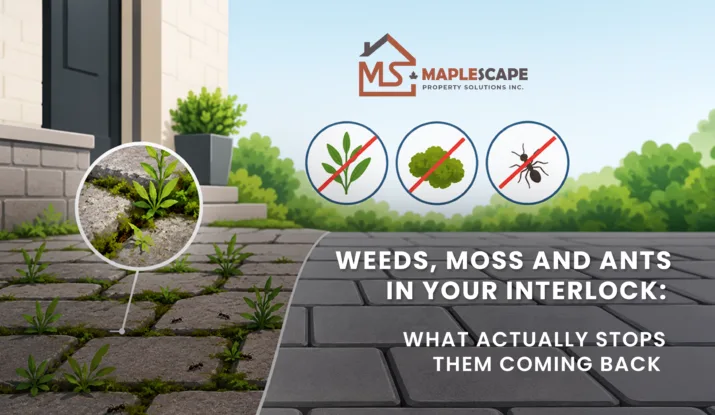
Pulling weeds between pavers is easy. Stopping them from returning is the part most homeowners struggle with.
The reason is simple: weeds, moss, and ants are usually signs of conditions between the pavers rather than just surface problems. Empty joints, trapped moisture, shade, organic debris, and poor drainage create the environment where these issues return.
For homeowners planning outdoor property maintenance, the goal is not only to remove what is visible today. It is improving the conditions that allow growth and movement to continue.
1. Why Do Weeds Keep Growing Between Pavers?
Weeds rarely grow because the pavers themselves are failing. They appear when seeds find moisture, sunlight, and enough organic material to establish roots.
Over time, soil, leaves, grass clippings, and decomposed plant matter collect inside joints. If joint sand has washed away, these spaces become deeper and easier for weeds to establish.
CMHA explains that properly filled paver joints help transfer forces between neighboring units and contribute to the stability of interlocking pavement. (cmha.org)
That means joint maintenance is not only about appearance. It also supports the way the pavement system works.
2. What Actually Helps Prevent Weeds Between Pavers?
2.1 Restore Low or Empty Joints
Joint sand is one of the most overlooked parts of interlock maintenance.
When joints become shallow, they collect more debris and moisture. Re-sanding can restore the filled appearance and improve the stability of the surface.
However, repeated sand loss is usually a clue. If the same area keeps losing material, check for water flow, edge movement, or settlement before simply adding more sand.
2.2 Keep Organic Debris Under Control
Leaves and plant debris slowly become growing material.
They hold moisture and create a small environment where weeds can return. Regular sweeping and seasonal cleanup are simple ways to reduce buildup.
This is why prevention often feels easier than repeatedly removing the same weeds every summer.
3. Why Does Moss Grow on Interlock Pavers?
Moss prefers areas where moisture stays longer.
Common conditions include:
- limited sunlight;
- heavy shade from trees or structures;
- slow drainage;
- poor air movement;
- frequent moisture exposure.
Moss is not only a visual concern. On walkways, stairs, and frequently used paths, it can become slippery when wet.
3.1 Does More Sunlight Help?
Sometimes.
You cannot always change the surrounding environment, but you can improve conditions around the pavement.
Trim overgrown vegetation where practical, remove organic buildup, and make sure water is not sitting against the surface.
A shaded walkway naturally requires more monitoring than a sunny driveway.
3.2 Is Removing Moss Enough?
Usually not.
Removing visible moss solves the immediate appearance problem, but if the surface remains constantly damp, it can return.
Long-term control comes from reducing the conditions that allow it to grow.
4. Why Do Ants Build Between Pavers?
Ants often choose to paver joints because they provide small, protected spaces.
Loose sand, warmth, dry gaps, and nearby food sources can make these areas attractive. Ant activity does not automatically mean the pavement is failing, but repeated colonies can disturb joint material.
Look for:
- loose sand around joints;
- small piles of material;
- repeated activity in one area;
- widening spaces between blocks.
The solution is not only removing the ants. Understanding why they prefer that location helps prevent the same issue from returning.
5. Which DIY Methods Help and Which Create Problems?
5.1 Boiling Water
Boiling water can damage small weeds through heat exposure. It may help with isolated growth but is not a permanent prevention method because roots and seeds can remain.
Use caution around nearby plants and surfaces sensitive to heat.
5.2 Pressure Washing
Pressure washing can remove dirt and surface growth, but excessive pressure can remove joint sand.
Once joint material is lost, the pavement can become more vulnerable to movement, wider gaps, and future weed growth.
If pressure washing is used, inspect the joints afterward.
5.3 Chemical Treatments
Products should always be selected and applied according to their labels and current regulations.
Ontario regulates pesticide use, including cosmetic applications. Removing weeds without improving the joint condition usually means the same problem returns.
6. When Does Growth Point a Bigger Interlock Problem?
Sometimes weeds and moss are symptoms rather than the main issue.
Look deeper when:
- joints repeatedly lose sand;
- pavers move under pressure;
- water remains after rainfall;
- one area stays damp longer;
- edges are spreading;
- Weeds return immediately after removal.
These signs may point toward drainage problems, washout, weak edge restraint, or settlement below the surface.
A clean appearance matters, but a stable pavement system matters more.
For homeowners dealing with recurring issues, Maple Scape can assess interlock conditions alongside seasonal maintenance needs instead of treating every weed as a separate problem.
7. How Should You Maintain Interlock Throughout the Year?
A simple seasonal routine prevents many recurring issues.
Spring: Inspect winter movement, remove debris, check joints, and address areas affected by freeze-thaw movement.
Summer: Remove weeds early, monitor shaded areas, and avoid allowing organic material to build up.
Fall: Clear leaves regularly because decomposing material creates ideal growing conditions.
Winter: Use de-icing products carefully and avoid practices that damage the paver surface or joint material.
This approach makes outdoor property maintenance more predictable because small issues are handled before they become larger repairs.
8. Conclusion
Weeds, moss, and ants are usually clues, not isolated problems.
Empty joints, trapped moisture, shade, debris, and drainage issues create the conditions where they return. Removing growth helps, but improving the environment underneath creates longer-lasting results.
A healthy interlock is not only about clean pavers. It depends on stable joints, controlled moisture, proper drainage, and regular seasonal attention.
Frequently Asked Questions
Why do weeds keep growing between pavers?
They return because seeds find moisture, debris, and open joints. Removing them helps temporarily, but improving joint conditions reduces the chance of repeated growth.
Does polymeric sand stop weeds permanently?
No. It can reduce weed-friendly gaps when installed correctly, but debris, cracks, and environmental conditions can still allow growth.
Is moss on pavers dangerous?
It can become slippery when wet, especially on walkways and steps. Removing moss and improving moisture conditions help reduce recurrence.
Should I pressure wash my interlock?
Yes, but carefully. Excessive pressure can remove joint sand and create future maintenance problems.
When should pavers be re-sanded?
When joints become noticeably low, lose material, or allow movement. Repeated washout usually means the underlying cause should be checked first.