
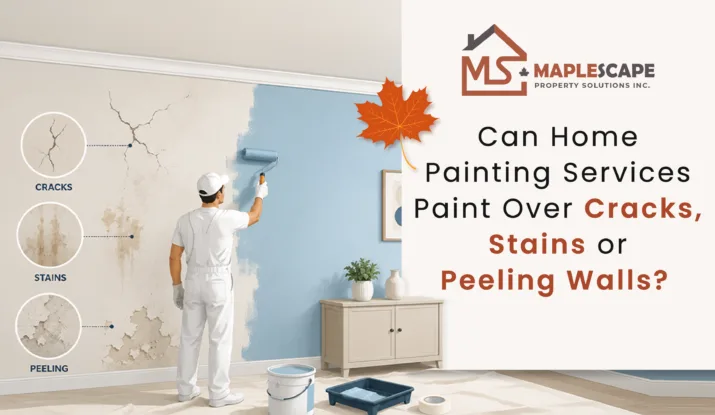
A fresh coat of paint can make a room feel finished again, but not every wall is ready for painting when you choose a color.
Cracks, stains, bubbling paint, peeling edges, and patched drywall all raise the same question: can you simply paint over them?
Good home painting services should answer that before opening the paint can. Some marks only need cleaning and preparation. Others point to moisture, poor adhesion, damaged drywall, or movement that needs attention first.
Painting can improve a sound wall. It should not hide a problem that is still active.
1. Can You Paint Directly Over Cracks in a Wall?
A small surface mark can look harmless, but paint alone does not fill or stabilize a crack.
For small cracks and holes, preparation usually means removing loose material, applying patching compound, allowing it to dry, sanding smoothly, cleaning away dust, and priming repaired areas when needed. A paint-ready surface should be clean, solid, dry, and free from unresolved imperfections.
Fresh paint follows the shape of the surface underneath it. If a crack is simply covered, it can remain visible or reappear.
1.1 Pay Attention to Cracks That Keep Returning
A crack that returns after repair deserves more attention than a one-time nail hole.
Look at where it is, whether it is widening, and whether other changes are happening nearby. Repeated cracking may mean the wall or coating is still moving.
A painter can prepare a paintable surface. If the crack suggests a larger structural or moisture problem, another professional may need to assess it before repainting.
2. What Should Home Painting Services Do About Wall Stains?
Not every stain behaves the same way.
A fingerprint or smudge may clean off. Grease, smoke, ink, rust, or water staining can be more persistent and may show through new paint without proper preparation.
The first step is identifying what caused the mark.
For ordinary dirt, cleaning may be enough. For stains that can bleed through a finish coat, a suitable stain-blocking primer may be needed before repainting.
2.1 Water Stains Need a Cause Check First
A brown or yellow water mark is different from an old scuff.
Before covering it, confirm whether the moisture source has been repaired and whether the drywall, plaster, or other material is still sound. Painting over an active leak can improve appearance temporarily while the underlying problem continues.
Once the source is corrected, damaged material can be repaired, peeling paint removed, and the stained area sealed with an appropriate primer before the finish coat.
That sequence matters more than simply choosing paint.
3. Why Does Paint Peel, Bubble or Flake?
Peeling usually means the paint film has lost adhesion to the surface below it.
Moisture may be getting into the wall or coating. Paint may have been applied over a dirty, damp, glossy, or poorly prepared surface. An older layer may already have weak adhesion.
If paint lifts easily with a scraper, painting over it gives the new coating an unstable base.
Before repainting, loose or flaking material should be removed, and the surrounding coating is checked for sound adhesion. The surface then needs cleaning, smoothing, repair, and primer where appropriate.
In bathrooms, kitchens, basements, or other moisture-prone areas, ventilation and humidity also deserve attention. If excess moisture causes the peeling, repainting without addressing it can lead to the same problem again.
4. When Is Primer Actually Necessary Before Repainting?
Primer is not required on every previously painted wall. It becomes useful when the surface has changed or when the finish coat should not have to manage the problem alone.
Common situations include:
- repaired drywall or plaster;
- bare patches exposed during scraping or sanding;
- stubborn water, smoke, grease, or other stains;
- glossy surfaces that need better adhesion;
- porous patches that may absorb paint differently;
- major color changes where a uniform base helps.
4.1 Why Patch Repairs Can Look Different Without Primer
Fresh fillers and the surrounding painted wall can absorb paint differently.
If the repaired area is left unsealed, the finish may look duller or more noticeable even when the color matches. Priming repaired areas helps create a more uniform base before the finish coat.
Preparation also includes removing sanding dust and making sure the wall is fully dry. Primer is part of the system, not a shortcut around poor preparation.
5. How Can You Tell Whether a Wall Needs Repair or Just Repainting?
Stand back from the wall first, then inspect it closely.
A wall that is faded, scuffed, or outdated may only need cleaning, minor patching, and repainting. A wall with active peeling, repeated cracking, soft areas, recurring water stains, or bubbling paint needs more investigation.
Ask yourself:
- Is the damage still changing?
- Do the walls feel dry and solid?
- Has the same stain returned before?
- Is paint lifting beyond one small spot?
- Are repairs visible because of texture, not just color?
- Is there a nearby plumbing, roof, ventilation, or moisture issue?
Those questions help separate cosmetic painting from repair work.
Maple Scape currently lists interior painting alongside general indoor repairs across Toronto and the GTA. Its indoor repair service includes damaged walls, drywall, water-damaged areas, and paint touch-ups, making assessment and preparation a natural part of deciding whether a wall is ready to repaint.
Good home painting services should not make every defect disappear under another coat. They should help determine what needs cleaning, patching, priming, repair, or further investigation before painting begins.
6. Conclusion
Paint works best when the wall underneath it is ready.
A scuff may only need cleaning. A nail hole may need a simple patch. A water stain may need the source fixed, and the area is sealed. Peeling paint may require scraping, sanding, and a closer look at moisture or adhesion.
That is the difference between covering a wall and preparing it properly.
When choosing home painting services, look for a process that starts with the condition of the surface, not just the color you want. Better diagnosis and preparation can make the finished wall look more natural, even, and consistent.
Frequently Asked Questions
Can painters paint over hairline cracks?
Small, stable cracks can often be repaired before painting. The area normally needs loose material removed, filler applied, sanding, cleaning, and primer where required. If a crack keeps returning or widening, investigate the cause first.
Can you paint directly over a water stain?
First confirm that the water source has been fixed and the wall material is sound. Persistent water stains may need a stain-blocking primer before the finish coat to reduce bleed-through.
Should peeling paint be removed before repainting?
Yes. Loose and flaking paint should be removed back to a sound edge. The remaining surface should then be cleaned, smoothed, repaired, and primed as necessary.
Does every drywall patch need a primer?
Priming repaired drywall is often useful because fillers can absorb paint differently from the surrounding wall. A suitable primer can help create a more even finish.
Can paint hide uneven walls?
Paint can change color and sheen, but it does not make dents, ridges, rough patches, or poor repairs disappear. Higher-sheen finishes can make surface variations more noticeable, so preparation remains important.