
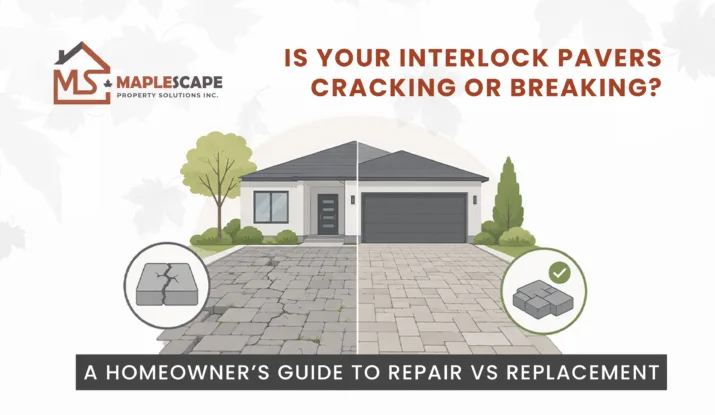
A cracked paver can make an entire walkway or patio look like it needs to be rebuilt.
The reality is usually more balanced.
Interlock systems are designed with individual units, which means one damaged block does not automatically mean complete replacement. The important question is why the damage happened and whether the surrounding pavement is still stable.
For homeowners planning outdoor property management, the goal is to understand whether the issue is a small surface repair, a few damaged units, or a sign that the system underneath needs attention.
A proper diagnosis can prevent unnecessary replacement while also avoiding repairs that only hide a larger problem.
1. Why Do Interlock Pavers Crack or Break?
Interlock pavers are durable, but they are still exposed to weather, movement, impact, and everyday use.
Common causes of cracking or damage include:
- Impact damage: A heavy object, dropped equipment, or vehicle load can crack individual units.
- Freeze-thaw movement: Water enters joints or surrounding soil, freezes, expands, and creates movement pressure.
- Base settlement: Weak or poorly compacted layers underneath can allow pavers to shift.
- Drainage problems: Water movement can wash away supporting material.
- De-icing salt exposure: Excessive use of certain salts can contribute to surface deterioration.
- Age and wear: Years of weather exposure can affect surface appearance.
The visible crack is only the symptom. The surrounding conditions determine whether a simple replacement will last.
2. Can One Cracked Paver Be Replaced Without Redoing the Whole Area?
Yes, often.
Individual replacement is one of the biggest advantages of interlocking pavement. Unlike continuous concrete slabs, damaged units can usually be removed and replaced while keeping the rest of the surface intact.
A single paver replacement is often suitable when:
- only one or two blocks are damaged;
- surrounding pavers remain level;
- joints are stable;
- there is no repeated movement nearby;
- The base appears to sound.
The repair process generally involves carefully removing the damaged unit, checking the surrounding support, installing a matching replacement, restoring joint material, and ensuring the repaired area sits correctly with the existing surface.
The challenge is not only replacing the block. It is making the repair blend naturally.
3. Why Is Matching Replacement Pavers Sometimes Difficult?
A replacement paver may not look identical to the original, even if it comes from the same manufacturer.
Outdoor materials change over time.
Existing pavers may have:
- faded from sunlight;
- developed natural color variation;
- collected surface wear;
- changed appearance due to cleaning products;
- accumulated mineral deposits.
Color matching becomes more difficult when:
- the original product is discontinued;
- the pattern is no longer available;
- only a few replacement units are needed;
- The surrounding pavement is several years old.
A practical approach is comparing:
- manufacturer;
- product name;
- size;
- thickness;
- texture;
- color blend;
- installation pattern.
Sometimes moving existing pavers from a less visible location can create a better visual match than adding brand-new units in the most noticeable area.
4. When Does a Cracked Paver Point a Bigger Problem?
Not every crack is isolated.
Look for patterns.
A homeowner should investigate further when:
- multiple pavers are cracking in the same area;
- new replacements fail again;
- several blocks are uneven;
- joints are spreading;
- water collects repeatedly;
- sections move under pressure;
- the surface feels unstable.
These signs may indicate issues below the visible surface.
An interlock system depends on several layers working together:
- compacted subgrade;
- granular base;
- bedding material;
- pavers;
- joint material;
- edge restraints.
If one of these layers fails, replacing only the top block may not solve the problem.
This is where outdoor property maintenance becomes more than the appearance of care. The focus shifts toward protecting the structure beneath the pavement.
5. What Is Spalling and Can It Be Repaired?
Spalling happens when the surface of a paver begins breaking down, flaking, or losing material.
It can appear as:
- rough patches;
- small surface chips;
- peeling edges;
- uneven texture.
A few affected blocks may be replaced.
However, widespread spalling can indicate:
- repeated moisture exposure;
- harsh de-icing practices;
- product ageing;
- surface deterioration across the pavement.
Before replacing every affected area, determine whether the damage is isolated or part of a larger surface condition.
6. Does Freeze-Thaw Damage Mean the Whole Interlock Needs Replacement?
No.
Toronto winters create challenging conditions, but freeze-thaw movement does not automatically destroy an interlock surface.
The repair decision depends on what moved.
If only the paver moved:
A lift-and-relay repair may be enough.
If the bedding layer shifted:
The affected area may need adjustment before reinstalling blocks.
If the base failed:
A deeper repair may be required.
The mistake is treating every uneven or cracked area the same way.
A small section with a stable foundation is very different from a patio where movement continues every season.
7. What Should You Check Before Choosing Repair or Replacement?
Before deciding, inspect the full area.
Ask:
Is the damage isolated?
One cracked block is a different project from twenty damaged units.
Is the surface stable?
Press gently on surrounding pavers. Movement suggests a support issue.
Is water involved?
Look for areas where water collects or flows repeatedly.
Is the pattern still available?
Matching matters, especially for decorative interlock designs.
Is the problem getting worse?
A small repair today may prevent a larger restoration later.
Maple Scape’s outdoor maintenance services include pathway and interlock-related repairs, allowing homeowners to assess whether a focused repair or broader solution makes more sense for their property. (maplescape.ca)
8. Repair or Replace: The Practical Decision
Choose repair when:
- damage is limited;
- surrounding pavers are stable;
- replacement material is available;
- The base remains reliable.
Consider a larger replacement when:
- damage covers a large area;
- movement keeps returning;
- drainage issues remain unresolved;
- the original installation has widespread failure;
- matching repairs are no longer practical.
The goal is not to choose the biggest project. It is choosing the repair that solves the actual issue.
9. Final Thoughts
Cracked or broken pavers do not automatically mean your patio or walkway has reached the end of its life.
The better approach is understanding what failed.
A single damaged block may need a simple replacement. A moving section may require re-leveling. Repeated cracking may point toward drainage, base, or installation issues.
With the right diagnosis, many interlock problems can be repaired without unnecessary replacement.
A well-maintained pathway is not only about appearance. It is about keeping the surface stable, safe, and functional for years to come.
Frequently Asked Questions
Can one cracked interlock paver be replaced?
Yes. Individual units can often be removed and replaced when surrounding pavers and the underlying structure remain stable.
Why do my replacement pavers look different?
Existing pavers change color and texture over time due to weather, sunlight, and wear. Exact matching is not always possible.
Does a cracked paver mean the base is damaged?
Not always. A single damaged block may come from impact, while repeated cracks or movement may indicate deeper issues.
Can damaged pavers be repaired instead of replaced?
Minor surface issues may be manageable, but cracked or broken units are usually replaced when structural integrity is affected.
When should I replace the whole interlock area?
Consider larger replacement when damage is widespread; movement keeps returning, or the supporting layers underneath are failing.