
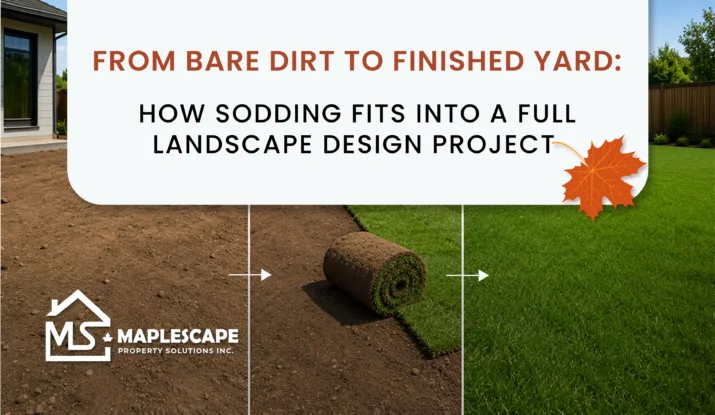
A new lawn can look like the final goal, but in a full yard renovation, sod is usually one of the last visible layers to go down.
If grading, patios, drainage, irrigation, or heavy planting still needs to work, installing turf too early can mean cutting it up or disturbing it later.
Good landscape design services treat the lawn as part of a connected site. Water must move safely, hard surfaces need finished elevations, irrigation needs proper zones, and planting beds need space. Sod comes after those decisions.
1. Why Should Landscape Design Come Before the Sod?
Because every major outdoor element affects something beside it.
A patio changes where rainwater travels. A walkway establishes finished heights. Garden beds reduce lawn areas. Retaining edges can alter grades. Downspouts, trees, steps, and irrigation also influence where sod belongs.
Toronto says property owners must manage drainage responsibly, and water should not be deliberately directed onto neighboring property. The city also emphasizes maintaining drainage features such as swales, catch basins, and storm drains.
That is why the first useful drawing is not simply “grass here, patio there.” It should consider elevations, drainage direction, access, existing trees, hardscapes, planting areas, and how people will actually move through the yard.
With landscape design services, the lawn becomes one part of the plan instead of simply covering leftover space.
2. What Is the Right Construction Order for a Full Yard?
A practical sequence for many Toronto residential projects looks like this:
| Stage | What Happens | Why It Comes Here |
| 1. Site planning and grading | Drainage, elevations, access, removal | Sets the base for everything else |
| 2. Hardscape construction | Patios, walkways, steps, edging | Establishes permanent finished heights |
| 3. Irrigation and buried services | Lines, sleeves, valves, zones | Avoids cutting finished turf later |
| 4. Soil and sod preparation | Topsoil, fine grading, lawn base | Creates an even rooting surface |
| 5. Sod installation | Turf laid, fitted, watered | Finishes open lawn areas |
| 6. Final planting and detailing | Smaller plants, mulch, cleanup | Completes beds without disturbing major surfaces |
This is a planning sequence, not an unbreakable rule.
This order also gives crews a way to protect finished work while materials, soil, and equipment continue moving through site.
Large trees, heavy shrubs, boulders, or materials requiring machinery may need to enter before sod. Otherwise, equipment can leave wheel ruts and damaged turf.
3. Why Do Grading and Hardscape Need to Be Finished First?
3.1 Grading Decides Where Water Goes
Grass does not fix poor drainage.
Toronto’s guidance for infill grading says proposed work should avoid creating new ponds and preserve appropriate drainage. Its criteria also consider swales, downspouts, paved areas, retaining walls, and adjacent-property drainage.
Permit requirements depend on the work, but the design principle is simple: establish how water moves or infiltrates before finishing the surface.
Changing grade after sod is installed can mean removing turf, adding or removing soil, and laying portions again.
3.2 Hardscape Establishes Fixed Heights
Patios, steps, walkways, curbs, and retaining edges are far less flexible than grass.
Build those first so the lawn can be fine graded to meet them cleanly. Later excavation can otherwise damage roots, compact soil, or create awkward elevation changes.
Toronto also encourages permeable landscape surfaces where practical because they can help rain and melt snow infiltrate rather than simply run off.
This is where outdoor construction and lawn planning need to be treated as one project rather than two unrelated bookings.
4. Where Do Irrigation, Utilities, and Trees Fit into the Sequence?
Buried work should be resolved before the finished lawn goes down.
If irrigation is planned, sleeves beneath walkways and supply lines are easier to install while soil is exposed. Cutting trenches through new sod later defeats careful sequencing.
Before digging, Ontario One Call says homeowners must request public utility locating at least five business days before projects that require excavation, including landscaping work.
Existing trees deserves similar attention.
Toronto protects many private trees 30 centimeters or more in diameter, City Street trees, and protected ravine features. Work that could injure them may require authorization.
So before changing grades, excavating near roots, building hardscapes, or bringing equipment through a tight yard, identify what must remain protected.
That step may change the whole layout, and it is much easier to change a drawing than a finished lawn.
5. When Should Sod and Planting Finally Go In?
Once heavy construction is finished, the lawn area can receive its final preparation.
Remove construction debris and compaction where necessary. Establish the intended soil depth and final grade. Smooth the surface without flattening drainage features, then install fresh sod promptly and begin watering.
This is the satisfying stage because the site suddenly stops looking like a construction zone.
But there is one sequencing detail worth discussing with your contractor: planting.
Small perennials and final mulch can follow sods. Large trees, substantial shrubs, or anything needing machinery should usually be positioned earlier if later installation crosses the finished lawn.
Professional landscaping is partly about recognizing those site-specific exceptions before they become reworked.
The same thinking applies when coordinating Landscaping Services Toronto for projects involving fences, decks, lighting, drainage, or other trades. Finish disruptive work first wherever practical, then protect the surfaces already completed.
6. Conclusion
A finished yard is built from the ground up, even though homeowners naturally notice the grass first.
Start with design and drainage. Establish grades. Complete patios, paths, retaining edges, and heavy work. Resolve irrigation and utility locations. Prepare the soil carefully. Then install the sod after major excavation is finished.
That sequence protects the work you have already paid for and gives the lawn a better base to establish on.
The strongest landscape design services also leave room for real-site judgement. Large planting may move earlier, drainage problems may change the plan, and protected trees may influence access.
If you are planning a full Toronto or GTA yard, Maple Scape can help coordinate the landscape from site preparation through the finished lawn.
Frequently Asked Questions
Should sod always be the last part of a landscaping project?
It is usually near the end because heavy excavation and construction can damage new turfs. Final planting, mulching, touch-ups, and cleanup may happen after sod, depending on access and plant size.
Can you install a patio after the new sod?
You can, but it usually creates avoidable disturbances. Patio excavation, base preparation, material movement, and grading can damage or remove nearby sods. Coordinating hardscape first generally protects the lawn.
Should irrigation be installed before sod?
If a permanent irrigation system is part of the design, installing underground components before sod usually avoids reopening the finished lawn. System design should also reflect separate lawn and planting-water needs.
What happens if landscaping changes the drainage?
Drainage should be reviewed before construction is complete. Toronto requires property owners to manage water responsibly and prohibits intentionally directing water onto neighboring property. Significant construction, grading, or protected-site conditions can involve additional requirements.
Do I need utility locations for a landscaping project?
If the work involves digging, Ontario One Call says a locate request is required. Homeowners should submit the request at least five business days before excavation and follow the locate instructions provided.