
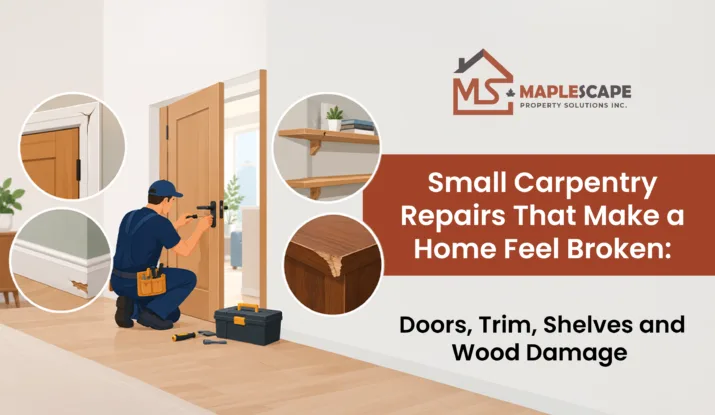
Small wood problems have a strange way of becoming the things you notice every day.
A loose handrail, a damaged baseboard, a door casing pulling away from the wall, or a shelf that no longer feels secure may not seem like major repairs. Yet these small details influence how finished and comfortable a home feel.
For homeowners considering Property Maintenance Toronto, the goal is often not a renovation. It is restoring the small elements that have worn down through daily use.
Many carpentry issues can be repaired without replacing large sections of a home. The important step is understanding whether the damage is cosmetic, hardware-related, or a sign that the surrounding material has weakened.
1. What Counts as a Small Carpentry Repair?
Minor carpentry covers the smaller wood and trim problems that sit between everyday maintenance and major renovation.
Common examples include:
- loose or damaged baseboards;
- cracked door casing;
- missing trim sections;
- loose handrails;
- damaged moulding;
- shelf support problems;
- cabinet adjustments;
- small wood repairs around doors and windows.
These issues are easy to ignore because they usually do not stop the home from functioning.
However, small damage often becomes more noticeable over time. A loose trim piece collects dirt. A damaged door frame affects how a room looks. A weak shelf becomes a safety concern when weight increases.
2. Why Do Baseboards and Trim Start Looking Damaged?
Trim protects transitions between surfaces while also creating a finished appearance.
Over time, it can experience:
- furniture impacts;
- vacuum damage;
- moisture exposure;
- loose fasteners;
- paint deterioration;
- seasonal movement.
2.1 Can Damaged Baseboards Be Repaired?
Often, yes.
A small dent, chipped corner, or loose section may only require:
- securing the trim;
- filling damaged areas;
- sanding;
- caulking gaps;
- repainting.
Replacement becomes more practical when the material is badly split, swollen, missing, or no longer holds securely.
The key is matching the repair to the damage. Replacing an entire wall of trim because one damaged section is not always necessary.
2.2 Why Do Trim Gaps Appear?
Small gaps between trim and walls can appear because materials move differently over time.
Wood expands and contracts with changes in moisture. Caulk joints may also separate as homes experience seasonal movement.
A small paintable gap may need simple maintenance. Larger gaps, repeated separation, or movement around door and window openings may need closer inspection.
3. Why Do Doors and Door Frames Need Carpentry Repairs?
Doors are one of the most used wooden systems in a home.
The issue is not always the door itself. Problems can involve:
- damaged casing;
- loose frame components;
- worn hinge areas;
- cracked trim;
- movement around the opening.
3.1 Damaged Door Casing
Door casing covers the transition between the frame and the wall.
When it separates or cracks, the door can still work properly, but the room begins to look unfinished.
A repair may involve:
- securing loose pieces;
- replacing damaged sections;
- filling nail holes;
- matching existing paint or stain.
3.2 Loose or Damaged Door Frames
A door frame carries more responsibility than a simple appearance.
Signs of a frame-related issue include:
- uneven gaps around the door;
- repeated latch problems;
- visible movement;
- cracks extending from corners.
If the surrounding structure is stable, repairs may be limited. If the frame itself has shifted, the cause should be addressed before cosmetic finishes.
4. What Makes Shelves and Wall-Mounted Wood Features Fail?
Shelves often fail because the original installation no longer matches the actual load.
A shelf holding a few decorative items may later carry books, equipment, plants, or storage containers.
Common causes include:
- unsuitable mounting support;
- loose brackets;
- damaged wood;
- overloaded hardware;
- weakened attachment points.
4.1 Can a Loose Shelf Be Strengthened?
Sometimes.
First, identify where the load is being transferred.
A strong repair may involve:
- replacing damaged brackets;
- improving support;
- repairing the mounting area;
- reinforcing the structure.
Simply adding more screws into damaged material does not always create stronger support.
For carpentry repair Toronto, the useful assessment is not only “Can it be attached again?” but “Will it safely support the intended use?”
5. When Is Repair Better Than Replacement?
A common homeowner’s concern is that a small repair will turn into a large project.
Usually, the opposite is true when problems are addressed early.
Repair often makes sense when:
- damage is isolated;
- surrounding wood is healthy;
- matching material is available;
- the structure remains secure;
- the repair can blend with existing finishes.
Replacement becomes more reasonable when:
- wood is severely damaged;
- moisture has affected the material;
- multiple connected pieces are failing;
- previous repairs no longer hold;
- the surrounding structure has moved.
The decision should be based on condition, not simply age.
6. How Does Moisture Affect Wood Repairs?
Moisture is one of the most important factors in wood durability.
The Canadian Wood Council explains that moisture availability is a major factor affecting wood decay. Keeping wood dry and addressing water sources help improve long-term performance.
Before repairing damaged wood, check:
- Is there water exposure nearby?
- Is the material swollen?
- Is paint peeling repeatedly?
- Is damage returning after repairing?
Painting over damaged wood without solving moisture problems usually creates a temporary improvement.
The repair should address both the visible damage and the condition that caused it.
7. What Tools and Skills Matter in Small Carpentry Work?
Good small repairs are often about precision rather than size.
Useful skills include:
- accurate measuring;
- matching existing profiles;
- careful cutting;
- proper fastening;
- surface preparation;
- finish matching.
A replacement trim piece that is slightly different in profile can stand out more than the original damage.
This is why small repairs often require patience. The goal is not simply attaching a piece of wood. It is making the repair look like it belongs.
Maple Scape’s general indoor repair services include minor repairs, fixture-related issues, wall repairs, and other small maintenance requirements where homeowners need help restoring worn areas rather than starting a larger renovation.
8. Final Thoughts
Small carpentry problems rarely appear urgent, but they shape how a home feels every day.
A loose trim piece, damaged door casing, or unstable shelf does not always mean a major project is waiting. Many issues can be corrected with focused repairs when the cause is understood.
The best approach is simple: inspect the damage, understand what failed, repair the affected area properly, and avoid replacing more than necessary.
With the right attention, small wood repairs can restore the comfort and finished appearance of a home without turning into a renovation.
Frequently Asked Questions
Are small carpentry repairs worth fixing?
Yes. Small repairs can improve appearance, safety, and function without requiring major renovation.
Can damaged trim be repaired without replacing everything?
Often. Isolated cracks, dents, loose sections, and small gaps can usually be repaired when the surrounding material is healthy.
Why do wooden shelves become loose?
Common causes include overloaded shelves, weak mounting points, damaged material, or hardware that no longer provide proper support.
Does moisture damage always require replacement?
No. The solution depends on how much strength the wood has lost and whether the moisture source has been corrected.
When should I call a professional for carpentry repairs?
Professional help makes sense when structural support, repeated failure, moisture damage, or precise finish matching is involved.