
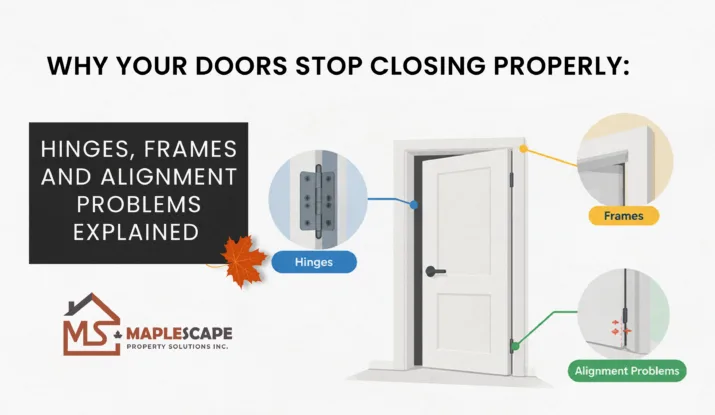
A door that suddenly starts rubbing, sticking, or refusing latch can feel like a bigger problem than it really is.
Many homeowners assume the door itself has failed, but the actual cause is often much smaller: a loose hinge, a shifted strike plate, seasonal swelling, worn hardware, or slight movement in the frame.
For homeowners planning Property Maintenance Toronto, the goal is not always replacing the door. It is finding the reason the door changed and fixing the part that is actually causing the problem.
1. Why Do Interior Doors Stop Closing Properly?
Doors rely on several parts working together:
- hinges holding the door at the correct height;
- the frame remaining square;
- the strike plate lining up with the latch;
- the door slab maintaining its shape;
- surrounding materials staying stable.
When one-part moves, the entire door can feel wrong.
Common signs include:
- the door rubbing against the frame;
- a gap appearing on one side;
- the latch missing the strike plate;
- the door opening or closing by itself;
- squeaking or resistance during movement.
The first step is identifying where contact or misalignment is happening.
2. What Causes a Door to Rub Against the Frame?
2.1 Loose or Worn Hinges
Hinges carry the door’s weight every time it opens and closes.
Over time, screws can loosen, hinge leaves can shift, or the mounting area can weaken. Even a small amount of movement at the hinge side can create rubbing on the opposite side of the door.
Check:
- loose hinge screws;
- gaps between hinge plates;
- movement when lifting the door slightly;
- screws that no longer tighten properly.
Sometimes tightening hardware restores alignment. If the screw hole has become damaged, the fixing point may need repair rather than simply another screw.
2.2 Seasonal Door Swelling
Wood reacts naturally to moisture changes.
During humid summer months, wooden doors may expand slightly. During drier winter conditions, they may shrink again.
A door that sticks only during certain seasons may not have a structural problem. It may need minor adjustment, better sealing, or improved humidity control.
However, forcing the door closed repeatedly can damage hinges, hardware, and the frame over time.
3. Why Does the Door Latch Stop Working?
A door can appear perfectly straight but still fail to lock properly.
Usually, the issue is alignment between the latch and strike plate.
3.1 Strike Plate Misalignment
The strike plate is the metal piece attached to the frame where the latch enters.
If the door has shifted slightly, the latch may hit the edge instead of entering smoothly.
Common causes include:
- loose hinges;
- frame movement;
- door sagging;
- previous hardware adjustments;
- Seasonal changes.
A small adjustment may solve the problem, but repeatedly moving the strike plate without checking alignment can hide the real issue.
3.2 Door Frame Movement
The frame provides the structure that allows the door to operate correctly.
If the frame shifts because of building movement, moisture, previous installation issues, or surrounding repairs, adjusting the latch may only provide temporary improvement.
Look for:
- uneven gaps around the door;
- trim separating from the wall;
- multiple doors affected in the same area;
- visible frame distortion.
When the frame is the problem, hardware adjustment alone will not create a lasting repair.
4. Can a Door Problem Be Fixed Without Replacing the Door?
Often, yes.
Many door issues are related to adjustment rather than replacement.
A repair may involve:
- tightening or replacing hinge screws;
- adjusting hinge position;
- realigning the strike plate;
- correcting minor frame issues;
- replacing worn hardware;
- adjusting thresholds or door sweeps.
For door repair Toronto, the important step is matching the repair to the cause.
Replacing a perfectly good door because the hinge is wasting money. On the other hand, repeatedly adjusting a damaged frame only delays the correct solution.
5. What About Exterior Doors That Let Cold Air In?
Exterior doors have additional challenges because they protect against the weather.
A drafty door may involve:
- worn weatherstripping;
- poor threshold contact;
- loose hinges;
- frame gaps;
- improper alignment.
Natural Resources Canada recommends checking weatherstripping, door operation, and sealing around openings as part of improving air leakage control.
Before replacing an exterior door, inspect whether the existing unit can regain a proper seal through adjustment and sealing work.
6. When Does a Door Need More Than a Small Adjustment?
Some problems indicate that the issue extends beyond hardware.
Professional assessment becomes more useful when:
- the door frame is visibly out of square;
- repairs keep failing;
- the door has water damage;
- the slab is warped;
- hinges are pulling away from the frame;
- Multiple openings in the home have similar problems.
A damaged door does not always mean replacement. Many doors remain serviceable when the surrounding structure and hardware are repaired correctly.
7. How Can Homeowners Prevent Door Problems?
Small checks can prevent frustrating repairs.
7.1 Check Hardware Before It Becomes Loose
Once or twice a year, inspect hinges, handles, and strike plates.
A loose screw is easier to address than a hinge that has enlarged its mounting holes.
7.2 Keep Moisture Problems Under Control
Water exposure can affect doors, frames, and trims.
Check for:
- leaks near exterior doors;
- condensation issues;
- damaged weather seals;
- swollen areas near the bottom edge.
7.3 Avoid Forcing a Sticking Door
A door that requires extra pressure is communicating with a problem.
Pushing harder may damage hinges, handles, latches, or the frame.
This is where Property Maintenance Toronto becomes valuable because regular checks can identify small alignment issues before they become larger repair decisions.
Maple Scape’s general indoor repair services include door-related repairs, adjustments, fixture issues, and other small interior maintenance needs across Toronto and the GTA.
8. Final Thoughts
A door that stops closing properly is usually a sign that something small has changed.
The solution may be as simple as correcting a hinge or adjusting hardware. In other cases, the frame, moisture conditions, or surrounding structure need attention.
The important step is diagnosis before replacement.
With the right repair approach, many sticking, rubbing, and misaligned doors can return to smooth operation without a major renovation.
Frequently Asked Questions
Why is my door suddenly rubbing?
Common causes include loose hinges, seasonal swelling, frame movement, or alignment changes. Check where the door contacts the frame before deciding on a repair.
Can tightening door hinges fix a sticking door?
Sometimes. If loose screws cause the movement, tightening or repairing the hinge connection may restore alignment.
Why does my door close but not latch?
The latch and strike plate may no longer line up. Check hinge movement and frame alignment before adjusting hardware.
Should I replace a door that will not close properly?
Not always. Many problems involve hinges, hardware, sealing, or minor alignment rather than the door itself.
Why does my exterior door have a draft?
Possible causes include worn weatherstripping, threshold gaps, loose hinges, or poor alignment. Check the seal before considering replacement.