
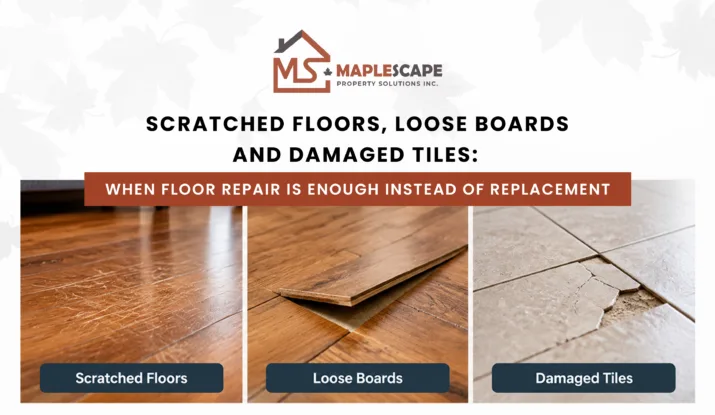
A damaged floor can make a room feel neglected, even when the problem is limited to one small area.
A deep scratch in hardwood, a chipped laminate edge, or a cracked tile often makes homeowners think about replacing the entire room. In many cases, that is unnecessary.
For homeowners exploring Property Maintenance Toronto, the better first question is: what actually failed?
A floor surface can show damage for very different reasons. Some issues are cosmetic and can be corrected locally. Others point toward moisture, movement, or problems underneath that need more attention.
Understanding the difference helps you make a smarter repair decision.
1. What Floor Problems Can Usually Be Repaired?
The best repair is usually the smallest one that solves the actual issue.
| Problem | Possible Solution |
| Light hardwood scratches | Touch-up or finish repair |
| Single damaged plank | Board replacement |
| Small laminate chip | Surface repair or plank replacement |
| One cracked tile | Individual tile replacement |
| Damaged grout | Grout repair or replacement |
| Loose transition strip | Hardware or fitting repair |
A floor does not automatically need replacement because one section looks damaged.
Start by checking whether the surrounding flooring is stable. A single damaged piece surrounded by healthy flooring is a very different situation from repeated damage across the room.
2. When Can Hardwood Scratches Be Fixed?
Hardwood is durable, but its finish protects the surface from everyday wear.
Not every scratch reaches the actual wood.
2.1 Surface Scratches
Light marks that affect only the finish may be suitable for a touch-up.
These commonly appear from:
- furniture movement;
- pet activity;
- small objects dragged across the floor;
- regular foot traffic.
The challenge is not only hiding the mark. It matches the color, finish level, and sheen so the repair blends naturally.
2.2 Deep Scratches and Gouges
When damage reaches the wood itself, the approach changes.
A deeper repair may involve:
- filling damaged areas;
- spot finishing;
- replacing affected boards;
- refinishing a larger section.
The National Wood Flooring Association explains that repair decisions depend on the severity and location of the damage, with some problems requiring board replacement or refinishing rather than simple touch-up work. (woodfloors.org)
A single damaged board does not always mean the entire floor needs refinishing.
3. Why Are Laminate Floors Lifting or Separating?
Laminate damage often looks dramatic because edges can rise, joints can separate, and boards can lose their flat appearance.
However, the visible problem is often caused by conditions around the floor.
Common causes include:
- moisture exposure;
- insufficient expansion space;
- heavy impact;
- damaged locking joints;
- uneven subfloor conditions.
Laminate flooring is designed to move slightly with environmental changes. Manufacturers such as Pergo emphasize the importance of expansion gaps around fixed objects because flooring needs room to expand and contract. (pergo.com)
Replacing one plank may work when the damage is isolated. If several areas are lifting, investigate the reason before replacing boards repeatedly.
4. Does a Cracked Tile Mean the Floor Needs Replacement?
Not always.
A single cracked tile can result from impact, a dropped object, or isolated damage.
Before replacing it, check:
- Are nearby tiles stable?
- Are grout lines intact?
- Is the crack isolated?
- Is there movement under the tile?
The repeated crack pattern is different.
Cracks running across multiple tiles, recurring grout failure, or loose tiles may suggest movement beneath the surface.
Tile systems depend on the stability of the layers below. If the substrate moves, replacing only the visible tile may not solve the underlying problem.
For floor repair Toronto, identifying the reason behind the crack is often more valuable than replacing the first damaged piece you notice.
5. What Causes Floors to Move or Separate?
Movement is one of the most important warning signs.
5.1 Hardwood Cupping and Gapping
Wood responds naturally to moisture changes.
The National Wood Flooring Association explains that wood expands when it absorbs moisture and contracts when moisture decreases. This can create issues such as cupping, shrinking, or visible gaps.
Small seasonal changes may be normal.
However, persistent movement can indicate:
- moisture exposure;
- humidity imbalance;
- installation problems;
- subfloor concerns.
Fixing the appearance without understanding the moisture condition may only delay the problem.
5.2 Uneven Flooring and Subfloor Issues
If flooring feels uneven, bouncy, or unstable, the visible surface may not be the only concern.
Possible causes include:
- damaged underlayment;
- uneven subfloor;
- moisture-related changes;
- installation issues.
A surface repair will not correct a support problem.
6. How Do You Decide Between Repair and Replacement?
Use three questions.
6.1 Is Damage Limited?
If only one board, tile, or small section is affected, a local repair is often worth exploring.
6.2 Is the Flooring Still Stable?
A damaged surface with stable surrounding flooring is easier to repair.
Movement, repeated cracking, or spreading damage suggests a bigger issue.
6.3 Can the Repair Blend Properly?
Material matching matters.
Older flooring may have:
- discontinued colors;
- changed finishes;
- weather differences;
- unavailable patterns.
A technically successful repair may still look noticeable if the replacement material does not match.
7. What Should Homeowners Check Before Calling for Repair?
Take a few observations first.
Note:
- where the damage started;
- whether it is getting worse;
- whether moisture was involved;
- whether nearby areas are affected;
- whether the floor moves under pressure;
- Whether replacement material is available.
Photos are useful, too. Capture the damaged area and a wider room view, so the overall pattern is clear.
This information helps determine whether the right solution is a touch-up, replacement of a small section, or deeper investigation.
Maple Scape’s general indoor repair services include flooring-related fixes such as damaged hardwood, laminate, and tile areas, making it easier to assess the actual repair scope before considering larger work.
Final Thoughts
A damaged floor does not always require a complete renovation.
Many flooring problems can be solved with targeted repairs when the surrounding system is healthy. The important step is understanding whether you are dealing with surface damage, material failure, moisture, or movement underneath.
A careful assessment can help protect your budget while restoring the part of the home that needs attention.
The goal is not replacing more than necessary. It is finding the repair that makes the floor stable, functional, and ready for years of use.
Frequently Asked Questions
Can one scratched hardwood area be repaired?
Yes. Light finish scratches may need only touch-up, while deeper scratches may require filling, spot repair, or board replacement.
Does lifting laminate always mean replacing the whole floor?
No. First identify whether the cause is moisture, expansion pressure, damaged joints, or another issue. Local repairs may work when the problem is isolated.
Can one cracked tile be replaced?
Yes, when surrounding tiles and the substrate are stable. Repeated cracking may indicate movement underneath.
Are gaps in hardwood always a problem?
Not always. Seasonal movement can create small changes. Large or persistent gaps should be assessed, especially if moisture may be involved.
When should a floor be replaced instead of repaired?
Replacement becomes more practical when damage is widespread; matching materials are unavailable, the subfloor is affected, or repairs keep failing.