
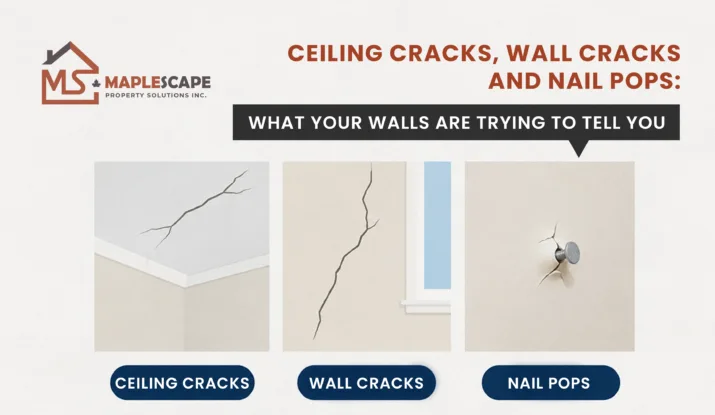
A small crack on a wall can create a surprisingly big question.
Is it just an old paint issue? Is the house settling? Is moisture involved? Does it need a simple patch, or is something underneath changing?
Most wall imperfections are not a reason to panic. Homes naturally move with temperature changes, humidity, and seasonal conditions. The important part is understanding what type of damage you are looking at and whether it is stable or getting worse.
For homeowners considering Property Maintenance Toronto, the goal is not to repair every mark immediately. It is to identify the cause, choose the right level of repair, and avoid covering a problem that needs attention first.
1. What Do Different Wall Cracks Actually Mean?
Not every crack carries the same message.
A thin line near a drywall joint is very different from a widening diagonal crack near doors or windows. The location, direction, size, and whether it changes over time, all provide useful clues.
Common wall issues include:
- Hairline cracks: Small surface cracks often caused by normal movement, paint shrinkage, or minor drywall changes.
- Drywall joint separation: Cracks appearing along taped seams where drywall panels meet.
- Corner cracks: Damage around corners where drywall compound or corner bead may have moved.
- Nail pops: Small raised circles where drywall fasteners become visible through the surface.
- Moisture-related damage: Staining, bubbling paint, soft areas, or repeated cracking linked to water.
The first step is observation. A crack that stays unchanged for years is different from one that grows, returns after repair, or appears alongside other warning signs.
2. When Is a Crack Cosmetic and When Does It Need Attention?
A cosmetic crack usually affects appearance but not the strength or function of the wall.
Examples include:
- a thin crack along a drywall seam;
- minor paint separation;
- small nail pops;
- shallow surface imperfections.
These problems are often repaired by preparing the area, applying joint compound, sanding smooth, priming, and repainting.
However, some signs deserve closer attention:
- cracks wider than normal hairline lines;
- cracks that continue growing;
- repeated cracks after previous repairs;
- water stains or dampness;
- doors or windows suddenly becoming difficult to operate nearby;
- uneven or bulging wall surfaces.
The repair decision should come after understanding why the damage appeared.
A fresh layer of paint may improve appearance temporarily, but it will not stop movement, moisture, or an underlying repair issue.
3. Why Do Nail Pops Keep Appearing on Drywall?
Nail pops are one of the most common wall complaints.
They appear as small circular bumps where a drywall fastener has moved slightly and pushed through the surface layer.
This does not always mean the wall is failing. Changes in humidity, normal building movement, or slight movement between drywall and framing can contribute.
A proper repair usually involves:
- removing loose material around the pop;
- securing the area if needed;
- applying patching compound;
- allowing it to dry;
- sanding smooth;
- priming before repainting.
Simply pushing the bump back and repainting often leads to the same issue of returning.
For recurring nail pops, the question is not only “How do I hide this?” but “Why is this connection moving?”
4. What Happens During Professional Drywall Repair?
A quality repair focuses on blending, not just filling.
For drywall repair Toronto, the visible patch is only one part of the process.
A typical repair involves:
4.1 Surface Preparation
The damaged area is cleaned and loose material is removed. Dust, weak paint edges, and unstable sections need to be addressed before new material is applied.
4.2 Filling and Smoothing
Joint compound or suitable repair material is applied in layers when needed. Larger repairs often require more than one application because the material shrinks slightly as it dries.
4.3 Sanding and Surface Matching
The repaired area is sanded until the transition between old walls and repair is difficult to see.
This step is where many quick repairs fail. A filled hole may be structurally closed but still visible because the surrounding texture and finish do not match.
4.4 Priming and Painting
A repaired area can absorb paint differently from the surrounding wall. Primer helps create a more consistent surface before the final coating.
Professional wall repair is not only about fixing damage. It is about making the repair disappear visually.
5. How Can Moisture Damage Be Different from Normal Cracks?
Moisture changes the repair approach completely.
A wall crack caused by normal movement can often be repaired after preparation. A crack caused by water movement needs the moisture source addressed first.
Look for:
- brown or yellow staining;
- bubbling paint;
- soft drywall;
- musty smells;
- repeated damage in the same location;
- discoloration after rainfall or plumbing use.
Water damage can come from several sources, including roof issues, plumbing leaks, condensation, or moisture entering from another area.
Repairing the surface without fixing the source often leads to repeated damage.
This is why assessment matters before patching.
6. Can Wall Repairs Be Done Without Repainting the Entire Room?
Sometimes.
Small repairs may only require spot priming and touch-up paint if the existing colour and finish are available.
However, touch-ups become harder when:
- paint has faded over time;
- the finish has changed;
- the original color is unknown;
- the repair is large;
- Lighting highlights the difference.
For larger patches, repainting the full wall often creates a more consistent appearance than trying to blend into a small, repaired section.
A good repair plan considers both the damage and the final appearance.
7. What Should Homeowners Check Before Calling for Repairs?
Before arranging professional help, collect a little information.
Take clear photos from different distances. Note:
- when you first noticed the issue;
- whether it has changed;
- whether it appears after weather changes;
- whether moisture is nearby;
- whether doors or windows are affected;
- Whether previous repairs have failed.
This helps determine whether the problem is surface-level or requires deeper inspection.
Maple Scape’s general indoor repair services Toronto and the GTA include wall repairs, drywall-related fixes, and paint touch-ups, making these assessments useful when several small interior issues need attention together.
8. Conclusion
Walls communicate what is happening inside a home
A small crack may only need a careful patch. A recurring stain or widening gap may need a deeper look. The right repair starts with understanding the reason behind the damage rather than immediately covering the mark.
For Property Maintenance Toronto, the best approach is simple: identify the cause, repair the affected area properly, and restore the finish so the home feels maintained again.
Most wall problems do not require dramatic solutions. They require the right diagnosis and a repair approach that matches the actual condition.
Frequently Asked Questions
Are small drywall cracks normal?
Many small cracks can result from normal movement, humidity changes, or drywall finishing issues. Growing cracks, moisture signs, or repeated failures should be investigated.
Should I paint over a wall crack?
No. Repair the cause and prepare the surface first. Painting over a crack usually hides the appearance temporarily but does not solve the underlying issue.
Can nail pops be permanently fixed?
Often, they can be repaired successfully, but recurring nail pops may indicate movement between drywall and framing that should be checked.
Does every ceiling crack mean structural damage?
No. Many ceiling cracks are related to drywall joints or normal movement. However, widening cracks, sagging areas, or moisture signs require further assessment.
How long does drywall repair usually last?
A properly prepared repair can last for years. Repairs often fail when the original cause, moisture issue, movement, or poor surface preparation is not addressed.