
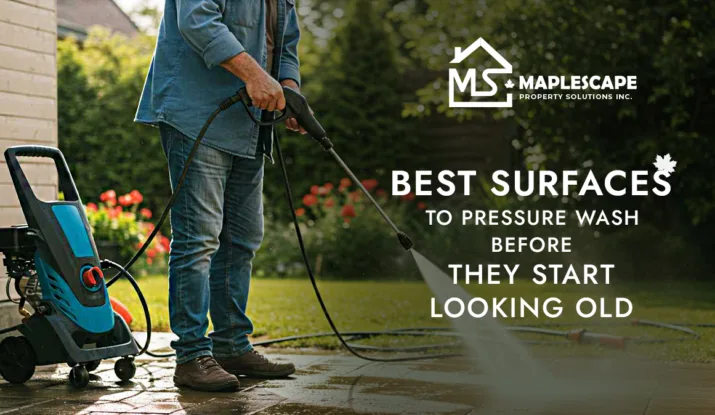
Outdoor surfaces naturally collect dirt, dust, algae, mildew, stains, and weather marks over time. At first, these changes may look minor, but they can gradually make driveways, patios, walkways, decks, and fences appear older than they actually are.
Pressure washing is one of the most effective ways to refresh outdoor areas before buildup becomes harder to remove. For homeowners considering pressure washing in Toronto, knowing which surfaces benefit most from cleaning can help protect curb appeal and extend the life of exterior materials.
Why Does Pressure Washing Matter for Outdoor Surfaces?
Exterior surfaces are constantly exposed to weather, foot traffic, vehicle marks, leaves, moisture, and pollution. Over time, this buildup can make surfaces look dull, stained, or neglected.
Pressure washing helps remove:
- Dirt and grime
- Algae and mildew
- Moss buildup
- Oil stains
- Mud and salt residue
- Weather-related discoloration
Regular cleaning is not only about appearance. It can also help reduce surface wear, prevent slippery areas, and make outdoor spaces safer and more usable.
Can Driveways Be Pressure Washed?
Yes, driveways are one of the best surfaces to pressure wash.
Driveways often collect:
- Tire marks
- Oil stains
- Dirt
- Salt residue
- Mud
- Algae near shaded areas
Concrete and paved driveways can start looking aged when stains sit for too long. Pressure washing helps restore a cleaner appearance by removing surface buildup and discoloration.
For Toronto homes, driveway cleaning is especially useful after winter because snow, road salt, and moisture can leave visible residue behind.
Should Patios Be Pressure Washed?
Patios are outdoor living areas, so they should feel clean and comfortable. However, they often collect dirt from furniture, foot traffic, leaves, and weather exposure.
Pressure washing can help clean:
- Concrete patios
- Stone patios
- Interlocking pavers
- Brick surfaces
- Outdoor seating areas
A clean patio improves the overall feel of the backyard and makes the space more enjoyable for family use or entertaining guests.
If stains or algae are ignored, the surface may become slippery or harder to clean later.
Are Walkways and Pathways Good for Pressure Washing?
Walkways and pathways are high-traffic areas that often show dirt quickly.
Common issues include:
- Mud tracking
- Grass stains
- Moss between stones
- Algae in shaded areas
- General discoloration
Pressure washing helps restore walkways and improves visibility of the surface texture. This is especially helpful around entrances, side paths, garden walkways, and backyard routes.
Clean pathways also create a better first impression for visitors.
Can Pressure Washing Improve Curb Appeal?
Yes, pressure washing can make a visible difference in curb appeal. Outdoor surfaces often age slowly, so homeowners may not notice how dull they have become until they are cleaned.
Areas that affect curb appeal most include:
- Driveways
- Front walkways
- Porch steps
- Exterior walls
- Fences
- Garage areas
A clean exterior makes the property look better maintained without requiring major renovation work.
For homeowners planning to sell or rent a property, pressure washing can be a practical way to improve presentation before photos, showings, or inspections.
Is Pressure Washing Safe for Decks?
Decks can be pressure washed, but they require the right approach. Too much pressure can damage wood, loosen fibers, or create surface marks.
Deck cleaning should consider:
- Wood type
- Age of the deck
- Existing sealant
- Surface condition
- Pressure level used
For wooden decks, a lower-pressure method is usually safer. Composite decks may also need manufacturer-safe cleaning methods.
The goal is to remove dirt, mildew, and stains without damaging the material.
Can Fences Be Pressure Washed?
Fences are constantly exposed to rain, dust, sun, and changing temperatures. Over time, they may develop discoloration, mildew, or dirt buildup.
Pressure washing may help clean:
- Wooden fences
- Vinyl fences
- Some metal fences
- Privacy fences
- Garden fencing
Wood fences require careful handling to avoid surface damage. Vinyl fences are generally easier to clean but still need the right pressure setting.
Cleaning a fence can make a backyard look brighter and better maintained.
What Outdoor Stains Can Pressure Washing Remove?
Pressure washing can help reduce or remove many common outdoor stains.
These may include:
- Mud stains
- Tire marks
- Salt residue
- Moss
- Algae
- Mildew
- Food spills on patios
- General grime
Some stains, such as deep oil marks or rust, may require additional treatment. The success depends on how long the stain has been present and the type of surface.
Cleaning early usually produces better results than waiting until buildup becomes deeply embedded.
How Often Should Outdoor Surfaces Be Pressure Washed?
The ideal frequency depends on location, surface type, shade, weather exposure, and use.
General guidance:
- Driveways: once a year or as needed
- Patios: once a year before heavy use season
- Walkways: once or twice a year depending on buildup
- Decks: as needed, with care
- Fences: every 1 to 2 years depending on material
Homes near trees, shaded areas, or busy roads may need more frequent cleaning because moisture, pollen, and dust build up faster.
What Surfaces Need Extra Care?
Not every surface should be cleaned with the same pressure level.
Surfaces that need caution include:
- Old wood
- Painted surfaces
- Loose brick or stone
- Damaged concrete
- Delicate siding
- Older fences
Using too much pressure can cause damage. Before washing, inspect the surface for cracks, loose pieces, peeling paint, or weak spots.
If a surface already has damage, it may need repair before cleaning.
What Mistakes Should Homeowners Avoid?
Pressure washing may look simple, but incorrect use can cause problems.
Common mistakes include:
Using Too Much Pressure
High pressure can damage wood, paint, grout, and soft materials.
Holding the Nozzle Too Close
This can leave marks or uneven cleaning patterns.
Ignoring Surface Type
Different materials require different pressure settings.
Cleaning Without Pre-Treatment
Some stains need treatment before washing.
Washing Damaged Areas
Weak surfaces can worsen under pressure.
Avoiding these mistakes helps protect outdoor materials while improving the final result.
When Should You Book Pressure Washing?
The best time is usually before outdoor spaces begin heavy seasonal use.
Good times include:
- After winter
- Before summer gatherings
- Before listing a property
- After construction or landscaping work
- When surfaces look stained or slippery
In Toronto, spring and early summer are especially practical because outdoor areas are being prepared for regular use.
Pressure washing can refresh many outdoor surfaces before they start looking old, stained, or neglected. Driveways, patios, walkways, decks, fences, and entry areas all benefit from regular cleaning when done with the right technique.
For homeowners considering pressure washing Toronto services, the key is knowing which surfaces need cleaning and which ones require extra care. Professional pressure washing can help remove buildup safely, improve curb appeal, and keep outdoor spaces looking cleaner for longer without risking damage from incorrect pressure settings.