
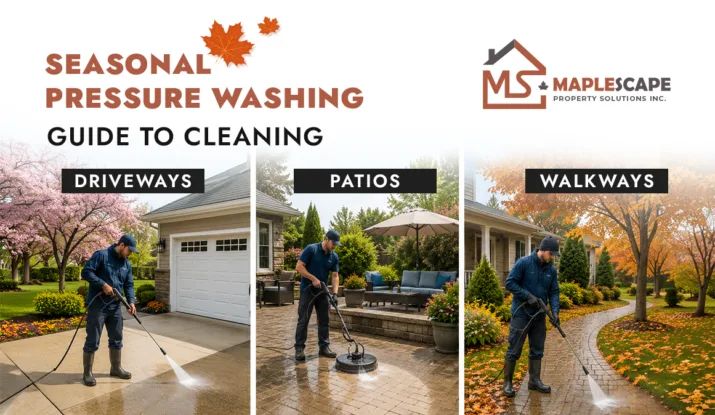
Outdoor surfaces go through a lot during the year. Driveways collect tire marks and salt residue, patios gather dirt and stains, and walkways often develop moss or algae in shaded areas. These changes happen slowly, but over time they can make a property look older, duller, and less maintained.
A seasonal pressure washing routine helps keep these surfaces cleaner and safer throughout the year. For homeowners considering pressure washing in Toronto, understanding when and how to clean driveways, patios, and walkways can make outdoor maintenance much easier.
What Is the Best Time for Pressure Washing in Toronto?
The best time for pressure washing is usually spring, early summer, or early fall. These seasons offer better weather conditions for outdoor cleaning and drying.
Spring is especially useful because outdoor surfaces often collect dirt, salt, and debris during winter. Cleaning after the snow season helps remove buildup before it settles deeper into concrete, stone, or paver surfaces.
Early summer is also practical because patios, walkways, and driveways are used more often during warmer months. A clean outdoor area improves both appearance and usability.
Fall pressure washing can help remove leaves, mud, and organic buildup before winter arrives.
Should You Pressure Wash After Winter?
Yes, post-winter cleaning is one of the most important seasonal tasks for exterior surfaces.
During winter, driveways and walkways are exposed to:
- Road salt
- Snow
- Ice melt products
- Mud
- Moisture
- Freeze-thaw stress
If this buildup remains for too long, it can make surfaces look stained and worn. Salt residue may also affect certain materials over time.
Pressure washing after winter helps restore a cleaner surface and prepares outdoor areas for spring and summer use.
How Often Should Driveways Be Pressure Washed?
Most driveways benefit from pressure washing at least once a year. However, frequency depends on use and exposure.
A driveway may need cleaning more often if:
- Vehicles leave oil or tire marks
- The area is shaded and collects algae
- Salt residue remains after winter
- There is heavy foot or vehicle traffic
- The surface looks dark or stained
Driveways are one of the first things people notice when approaching a home. Keeping them clean helps improve curb appeal without requiring major upgrades.
How Do You Clean a Driveway the Right Way?
Driveway cleaning should begin with preparation.
Before pressure washing:
- Remove vehicles
- Sweep loose debris
- Check for oil stains
- Clear nearby objects
- Inspect cracks or damaged areas
Oil stains and deep marks may need pre-treatment before washing. Pressure alone may not fully remove stains that have been sitting for a long time.
During cleaning, it is important to use steady, even passes. Uneven movement can create visible cleaning lines, especially on concrete.
Why Should Patios Be Pressure Washed Seasonally?
Patios are outdoor living areas. They are used for relaxing, dining, entertaining, and spending time with family. Because of this, they should feel clean and comfortable.
Patios often collect:
- Food spills
- Dust
- Leaves
- Mildew
- Furniture marks
- Soil from garden areas
Seasonal cleaning helps refresh the space before heavy use. It also reduces slippery buildup and makes the patio more inviting.
For homeowners preparing outdoor areas for summer, patio cleaning is one of the most useful pressure washing Toronto maintenance tasks.
How Should You Prepare a Patio for Pressure Washing?
Patios need careful preparation before cleaning.
Start by:
- Moving outdoor furniture
- Removing planters and decor
- Sweeping loose debris
- Checking for loose pavers or cracks
- Covering delicate nearby plants if needed
If the patio has interlocking pavers, cleaning should be done carefully to avoid disturbing joint sand. For older stone or brick patios, lower pressure may be needed to prevent surface damage.
The goal is to clean the patio without weakening the structure.
Are Walkways and Pathways Safe to Pressure Wash?
Walkways and pathways are usually good candidates for pressure washing, especially when dirt, moss, or algae begins to build up.
These surfaces often become dirty due to:
- Foot traffic
- Lawn clippings
- Mud
- Leaves
- Moisture in shaded areas
Pressure washing can make walkways look cleaner and reduce slippery patches caused by moss or algae.
This is especially useful near entrances, garden paths, side yards, and backyard access points.
How Does Pressure Washing Prevent Long-Term Surface Damage?
Pressure washing helps remove buildup before it becomes harder to manage.
Organic growth such as moss, algae, and mildew can hold moisture against surfaces. Over time, this may contribute to staining, slipperiness, and surface wear.
Regular cleaning helps:
- Reduce buildup
- Improve surface appearance
- Prevent slippery areas
- Make future cleaning easier
- Support better outdoor maintenance
It is not just about making surfaces look new. It is about preventing dirt and organic matter from becoming a long-term problem.
Can Pressure Washing Improve Curb Appeal?
Yes, pressure washing can quickly improve how a property looks from the outside.
Clean driveways, patios, and walkways create the impression of a well-maintained home. This is especially helpful before:
- Hosting guests
- Taking property photos
- Listing a home for sale
- Preparing outdoor areas for summer
- Completing seasonal maintenance
Even when landscaping and exterior features are well maintained, dirty hard surfaces can make the property look less polished.
What Pressure Washing Mistakes Should Homeowners Avoid?
Pressure washing may seem simple, but mistakes can damage surfaces.
Common mistakes include:
Using Too Much Pressure
High pressure can damage wood, older concrete, pavers, and painted surfaces.
Holding the Nozzle Too Close
This can create marks or uneven cleaning patterns.
Skipping Surface Inspection
Cracks, loose stones, or weak areas may worsen during cleaning.
Not Pre-Treating Stains
Oil, rust, and deep stains often need special treatment before washing.
Washing at the Wrong Time
Very cold weather or extreme heat can make cleaning less effective and harder to manage.
Using the right pressure, technique, and timing helps protect surfaces while achieving better results.
When Should You Call Professionals for Pressure Washing?
Some small cleaning tasks can be handled by homeowners, but professional support is useful when the area is large, heavily stained, or made of delicate materials.
Professional pressure washing can help with:
- Large driveways
- Interlocking patios
- Stained walkways
- Slippery algae-covered areas
- Older or sensitive surfaces
- Seasonal outdoor cleaning
Professionals understand pressure levels, surface types, and cleaning methods, which reduces the risk of damage.
Thus, Seasonal pressure washing helps keep driveways, patios, and walkways clean, safe, and visually appealing throughout the year. Spring and early summer are ideal for removing winter residue and preparing outdoor areas for regular use, while fall cleaning helps clear buildup before colder weather returns.
For homeowners looking into pressure washing in Toronto, a seasonal approach can make outdoor maintenance more effective and less stressful. With the right timing and technique, professional pressure washing can refresh hard surfaces, improve curb appeal, and help your property look well cared for year after year.