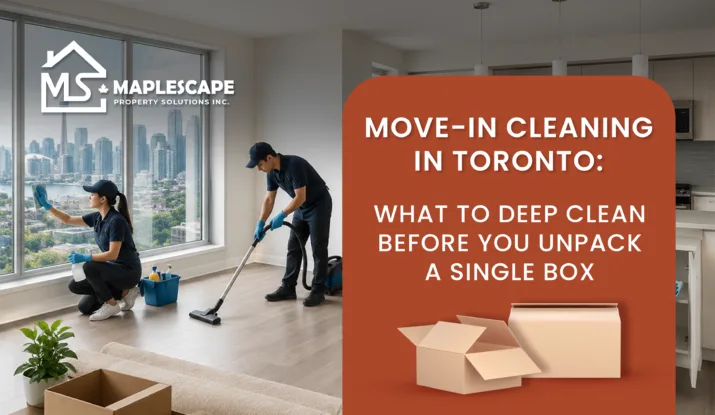
Opening the door to an empty home feels genuinely exciting. For a brief moment, every corner is easy to reach.
It is also the best moment for move in cleaning Toronto homeowners often wish they had done before boxes arrived.
An empty unit can still hold cooking film, bathroom residue, dust, pet hair, fingerprints, and debris from previous occupants or repairs. You do not need to treat the home like a contaminated space. You simply have a rare chance to clean surfaces before they disappear behind everyday belongings.
1. Why Clean an Empty Home Before You Unpack?
Because empty does not mean freshly cleaned.
Cabinets may have been emptied without being wiped. Bathroom fixtures may be dry but still carry soap film. Closet floors, baseboards, window tracks, and vent cover become easier to inspect once belongings are gone.
Health Canada recommends reducing settled dust through vacuuming, wiping, and wet mopping, and suggests a HEPA-filter vacuum where possible.
For move in cleaning Toronto, the advantage is timing. You can work from storage interiors outward, then finish the floors before your belongings create new traffic.
Think of it as creating your own clean baseline rather than guessing how thoroughly someone else cleaned.
2. Move In Cleaning Toronto: What Should You Deep Clean Before the Kitchen Gets Unpacked?
The kitchen should come early because unpacking quickly makes detailed cleaning awkward.
2.1 Clean Cabinets, Drawers, and Food-Storage Areas First
Wipe cabinet shelves, drawer interiors, fronts, handles, and accessible tracks. Look for crumbs, grease film, sticky residue, dust, and old shelf liners.
Then move to countertops, backsplash areas, the sink, faucet base, and appliance exteriors.
If the refrigerator is empty, remove washable shelves and bins where permitted, clean interior surfaces, dry them fully, and check seals and handles before adding food.
Clean visible grease and food residue from the oven or stovetop before cookware takes over the kitchen.
2.2 Clean Before You Sanitize
Cleaning and sanitizing are different steps. Visible soil, grease, and residue should come off first. Health Canada notes that heavily soiled surfaces require pre-cleaning and that hard-surface products must be used according to their labels, including contact time.
If you sanitize or disinfect suitable hard surfaces, use a product authorized for sale in Canada and follow its label. Good ventilation and surface compatibility matter too.
3. Which Bathroom Areas Deserve Attention Before the First Shower?
Bathrooms are easier to clean when towels, toiletries, bathmats, and storage baskets are still packed.
Clean the toilet bowl and exterior, sink, faucet, tub or shower, mirrors, shelves, tile, accessible grout, and the floor around fixtures.
Then look for what makes a clean bathroom still feel used: hair in corners, soap film on shower edges, residue around the faucet base, dust on an exhaust-fan cover, and buildup around the toilet base.
Focus on surfaces you will touch often:
- faucet handles;
- toilet flush handle;
- door handle;
- light switches;
- vanity handles;
- Shower controls.
Do not automatically disinfect every surface. If sanitizing or disinfecting is appropriate, clean first and use a suitable labelled product on compatible surfaces. Health Canada requires authorized biocides to carry identifying information and directions for use.
This is where deep cleaning services Toronto can help when the bathroom has heavier buildup, or your moving window is short.
4. What Should You Clean in Bedrooms, Closets, and Living Areas?
Empty rooms look simply, but they also reveal dust that furniture later makes it inconvenient to reach.
4.1 Work from Higher Surfaces Down
Start with reachable ledges, shelves, door frames, windowsills, and vent covers. Wipe closet shelving and rods before hanging clothes.
Use microfiber cloths for suitable hard surfaces and vacuum rather than sweep when fine dust is a concern. Health Canada recommends HEPA-filter vacuuming to help reduce small particles and settled dust indoors.
Check baseboards, corners, closet tracks, and registers. If the property had recent repair work, pay extra attention to fine dust. Health Canada recommends thorough cleaning after renovation activities and HEPA-filter vacuuming where possible.
4.2 Leave Floors Until the Room Is Otherwise Finished
Dust settles downward. If you vacuum first and wipe shelves afterward, you create another floor-cleaning job.
Once upper surfaces are complete, vacuum carpet, including edges and closets. For suitable hard flooring, remove loose debris before damp cleaning and follow the flooring manufacturer’s care instructions.
That sequence makes move in cleaning Toronto easier: clean what gravity will dirty first, then finish the surface you will walk on.
5. What Equipment Makes Move-In Cleaning More Effective?
You do not need many commercial chemicals. A small kit can handle most empty home cleaning.
Useful basics include:
- a HEPA-filter vacuum with crevice and brush attachments;
- clean microfiber cloths separated by task;
- a suitable floor mop;
- non-abrasive pads for compatible surfaces;
- a general household cleaner;
- a kitchen-safe degreaser when needed;
- gloves when labels call for them;
- an authorized hard-surface sanitizer or disinfectant where appropriate.
Read labels before combining products and never mix household chemicals unless the label directs them. Health Canada advises using household chemical products according to their labels and with appropriate ventilation.
A professional move in move out cleaning service should be able to explain what products and equipment it uses, which surfaces they suit, and what the booked scope includes.
Before-and-after photos work well in an empty unit. Photograph cabinet interiors, bathroom fixtures, floor edges, and appliance interiors before cleaning, then capture the same angles afterward.
6. Conclusion
Move-in cleaning is easier in an empty home.
Start inside cabinets and appliances. Give kitchens and bathrooms the most detailed attention. Work high to low in empty rooms, then finish with vacuuming and floor cleaning. Sanitize only where it makes sense, using the right product for the surface.
A good move in cleaning Toronto is not about assuming the previous occupant left something dangerous behind. It is about starting with a home that feels genuinely yours.
If you would rather spend possession day enjoying the new place instead of scrubbing it, Maple Scape can help with move-in cleaning across Toronto and the GTA.
Frequently Asked Questions
Should I clean a home if the previous owner had already cleaned it?
Yes, if you want your own clean baseline. You do not need to assume the home is unhygienic. Focus on storage of interiors, kitchens, bathrooms, touch points, dust, and floors.
What should I clean before unpacking anything?
Prioritize cabinet and drawer interiors, refrigerator surfaces, bathroom fixtures, closets, shelves, windowsills, vent covers, baseboards, and floors. These areas become harder to reach once belongings arrive.
Should an empty home be disinfected before moving in?
Not automatically. Clean visible soil first. If sanitizing or disinfecting is appropriate, use an authorized product on compatible surfaces and follow the label, including contact-time directions.
Is a HEPA vacuum worth using during move-in cleaning?
It can be helpful for dust and fine particles. Health Canada recommends considering HEPA-filter vacuums because they can trap small particles rather than allowing more dust to recirculate indoors.
When should I book professional move-in cleaning?
Book before furniture and boxes arrive when possible. Professional help is practical when there is visible buildup, renovation dust, several bathrooms, or very little time before moving day.