
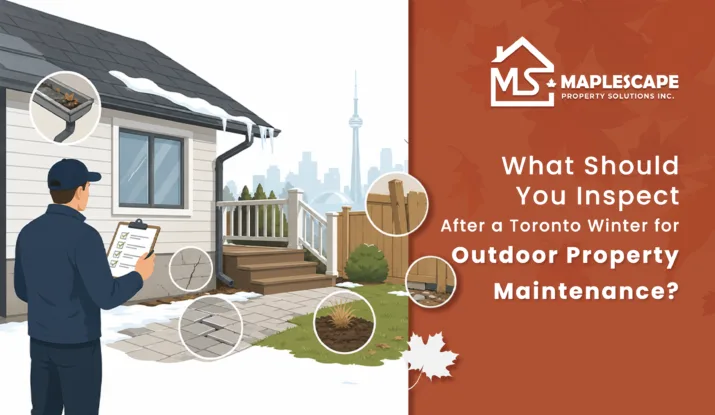
Winter rarely leaves a property exactly as it found it. The changes are not always dramatic. A walkway may sit slightly higher at one edge; a gate may start catching, or water may linger where the ground used to drain well.
That is why outdoor property maintenance after a Toronto winter should be less about hunting for obvious damage and more about noticing change.
A useful spring inspection asks three questions: what moved, where is water going, and what no longer feels solid or aligned?
1. Why Is a Spring Exterior Check Worth Doing?
Toronto winters expose exterior surfaces to cold, snow, ice, moisture and repeated freezing and thawing. The city notes that more freeze-thaw cycles contribute to pothole formation, while rapid swings between thawing and freezing can increase stress on underground infrastructure.
Spring is useful for comparing exterior conditions.
Do not begin with a repair list. Look for differences. A crack that has not changed may matter less than a new tilt in a step, post or retaining edge.
Spring inspection is about finding what winter changed before regular outdoor use begins again.
2. Outdoor Property Maintenance: What Should You Inspect First?
You do not need to inspect every square foot equally. Start with areas that carry people, manage water, support weight, or depend on alignment.
2.1 Walkways, Steps and Entry Areas
Walk the routes you use every day.
Notice raised edges, sinking pavers, widening joints, loose steps or areas that rock underfoot. One small shift may be harmless, but movement across nearby sections can suggest settlement below the surface.
Toronto’s Property Standards require stairs, porches, decks, ramps, guards, handrails and their support to be kept safe and in good repair.
Ask one question: does this area feel different to walk on than last season?
2.2 Fences and Gates
Winter movement often becomes obvious when something that relies on alignment stops working smoothly.
Open and close each gate. Look along the fence line before focusing on individual boards. A dragging gate may have a hinge problem, but it can also point to a moving post or frame.
Check for leaning posts, gaps around footings, loose fasteners and sections that no longer line up.
2.3 Drainage, Low Spots and Persistent Water
Spring runoff can reveal drainage problems that are harder to see in dry weather.
After rain or snowmelt, notice where water travels and where it stays. Check low areas beside walkways, fences, retaining edges and the house. Look around catch basins, swales and drainage paths for debris or blockage.
Toronto advises residents, where safe, to keep catch basins clear of ice, snow and debris so surface water can drain.
A wet patch is not automatically a problem. One that remains after surrounding areas dry is more useful for information.
2.4 Railings, Deck Boards and Retaining Features
Use your hands as well as your eyes.
Check railings for movement. Notice deck boards that flex differently, steps that rock, and retain walls or landscape edges that bulge, lean or separate.
Toronto requires retaining walls to remain structurally sound and in good repair.
These features deserve attention because they support people or hold material in place. New movement can matter more than staining or faded finishes.
3. How Can You Tell Cosmetic Winter Wear from a Real Maintenance Issue?
Not everything winter leaves behind needs fixing.
Discoloration, surface dirt and minor weathering can look untidy without affecting function. Pay more attention when appearance comes with movement, instability, recurring moisture, or loss of function.
Look for combinations. A crack plus sinking tells you more than a crack alone. A dragging gate plus a leaning post is more useful than a stubborn latch. A wet area plus shifting pavers deserves more attention than temporary standing water.
Also notice whether the problem is active. Take a photo and compare it after a few weeks. If alignment keeps changing or the same moisture pattern returns, you have evidence that the issue is developing rather than simply leftover winter wear.
4. What Order Should You Follow When Several Problems Appear?
Spring can make a property feel as though everything needs attention at once. It usually does not.
Start with safe access and support. Loose railings, unstable steps and obvious trip points should come first.
Next, follow the water. Recurring drainage problems can influence soil, hardscape edges, and fence posts, so understanding where moisture travel can make later repairs more useful.
Then look at the movement. Leaning posts, settling pavers, widening gaps and shifting borders deserve comparison over time.
Cosmetic work can usually wait until those functional issues are understood.
This keeps outdoor property maintenance practical. You are prioritizing what may affect another part of the property, not simply what looks worse.
5. When Is It Worth Bringing in a Property Maintenance Professional?
You can identify many spring changes yourself. The harder part is deciding whether symptoms share a cause.
A low walkway, wet soil and leaning fence post in the same area may be separate from problems, or they may be connected. That is when a broader inspection can be more useful than fixing each symptom separately.
Professional help also makes sense when an area feels unsafe; movement continues; the same repair has failed before, or you are unsure what should come first.
Maple Scape currently lists fence and gate repairs, pavement and walkway restoration, border and perimeter levelling, driveway and hardscape repairs, and general exterior fixes among its Toronto and GTA property maintenance services.
The goal is to understand what needs attention and what can reasonably wait.
6. Conclusion
A good post-winter inspection does not require you to find problems everywhere. It requires you to notice change.
Walk the routes you use. Test what should feel solid. Watch where spring water goes. Compare anything that looks different before assuming it needs replacement.
That approach makes outdoor property maintenance easier to manage because you are responding to evidence rather than appearance. Some issues only need to be watched. Others may need repairs. When several changes seem connected, understanding the cause first can keep you from fixing the same symptom again.
Frequently Asked Questions
When should I inspect my property after winter?
Wait until most snow and ice have cleared, and exterior areas are safe to walk. Another look after spring rainfall can reveal drainage patterns that were not obvious on a dry day.
What areas should I inspect after winter?
Start with walkways, steps, railings, decks, fencing, gates, drainage paths, retaining features and hardscape edges. Focus on anything that moved, loosened or stopped working normally.
Does every shifted paver need immediate repair?
No. A small, isolated shift may only be needed to monitor. Give it more attention if it creates a trip point, keeps moving, holds water, or appears with nearby settlement.
Why does my gate work differently after winter?
A gate may drag because hinges loosened; the frame shifted, or a supporting post moved. Check out the complete opening before assuming the latch is the problem.
Should drainage be checked if I do not see flooding?
Yes. Repeated ponding, soggy soil or water collecting beside hardscape can be early signs that water is not moving through the property as expected.