
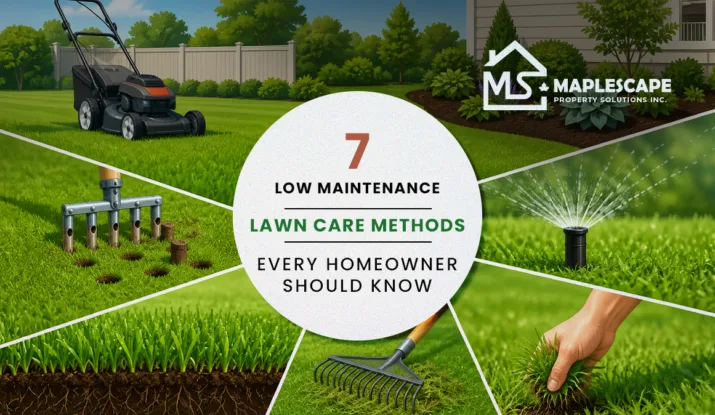
A clean, green lawn does not always need complicated care. In many cases, homeowners struggle because they follow the wrong habits, cut grass too short, water too often, or ignore small issues until they become difficult to fix. Low maintenance lawn care is about working smarter, not ignoring the lawn.
For homeowners who want better results without spending every weekend outside, a simple lawn care and maintenance routine can make the yard easier to manage. These seven methods can help reduce overgrowth, protect grass health, and keep your outdoor space looking neat with less effort.
1. Keep Grass at the Right Height
One of the easiest ways to reduce lawn stress is to avoid cutting grass too short. Many homeowners think short grass means less frequent mowing, but it often creates more problems.
When grass is cut too low, the soil gets exposed to more sunlight. This can lead to faster drying, weaker roots, and more weed growth. Taller grass helps shade the soil, hold moisture, and support stronger root development.
A good mowing habit is to remove only the top portion of the grass blade. During warmer months, keeping grass slightly taller can help the lawn stay healthier with less watering and repair work.
This simple method reduces stress on the lawn and makes long-term maintenance easier.
2. Follow a Consistent Grass Cutting Schedule
Irregular mowing is one of the main reasons lawns become uneven, patchy, or difficult to control. If grass grows too long between cuts, homeowners may be tempted to cut it aggressively in one session. That can shock the lawn and leave it looking rough.
A consistent schedule helps maintain even growth and cleaner appearance. During active growing months, many lawns need mowing every 1 to 2 weeks depending on rainfall, temperature, and grass condition.
A reliable grass cutting service can be helpful for homeowners who do not have time to maintain this schedule themselves. Regular cutting prevents overgrowth and keeps the lawn from becoming harder to manage later.
Consistency is one of the most practical low maintenance methods because it prevents bigger problems before they start.
3. Water Deeply Instead of Watering Every Day
Daily light watering may seem like good lawn care, but it often encourages shallow roots. Shallow roots make grass weaker during heat, dry weather, and seasonal stress.
A better method is to water deeply when the lawn needs it. Deep watering helps moisture reach the root zone, encouraging roots to grow stronger below the surface.
Low maintenance watering habits include:
- Water early in the morning
- Avoid watering during peak afternoon heat
- Check soil moisture before watering again
- Reduce watering after rainfall
- Avoid creating soggy lawn areas
The goal is not to water more often. The goal is to water better. A lawn with stronger roots usually needs less emergency care during dry periods.
4. Use Mulching When Grass Clippings Are Light
Grass clippings do not always need to be bagged. When the lawn is cut regularly and clippings are short, mulching can return organic matter to the soil.
Light clippings break down naturally and can support soil health over time. This reduces waste and saves cleanup effort.
Mulching works best when:
- Grass is not too long
- Clippings are not thick or wet
- The lawn is cut regularly
- The mower has a proper mulching function
However, heavy clumps should not be left on the lawn. Thick clippings can block sunlight, trap moisture, and create uneven patches.
Used properly, mulching is a simple way to reduce cleanup while supporting lawn health.
5. Control Weeds Early
Weeds are much easier to control when they are handled early. Once they spread, they compete with grass for sunlight, water, and nutrients. This can make the lawn thinner and harder to maintain.
Low maintenance weed control starts with prevention. A thick, healthy lawn naturally leaves less space for weeds to grow.
Homeowners should:
- Remove visible weeds before they spread
- Avoid cutting grass too short
- Maintain proper lawn density
- Keep edges and borders clean
- Watch weak or bare spots closely
Weeds often appear first in neglected corners, fence lines, garden edges, and bare areas. Checking these spots regularly can prevent larger lawn problems later.
6. Keep Lawn Edges and Borders Clean
A lawn can look messy even when the grass is cut if edges and borders are ignored. Overgrown edges near walkways, driveways, garden beds, fences, and patios can make the yard look unfinished.
Clean edges create a sharper and more maintained appearance without requiring major landscaping work.
Border maintenance may include:
- Trimming grass near fences
- Edging along walkways
- Clearing weeds near garden beds
- Removing debris from corners
- Keeping patio and driveway edges clean
This is where many homeowners notice the biggest visual difference. A neatly edged lawn often looks more polished even with a simple mowing routine.
For homeowners focused on property maintenance in Toronto, regular edge care should be part of the overall outdoor upkeep plan.
7. Choose Simple Lawn Features That Are Easy to Maintain
Low maintenance lawn care is also about making smart design choices. Some outdoor spaces become difficult to manage because they have too many small corners, narrow grass strips, delicate plants, or hard-to-reach areas.
A simpler lawn layout can reduce time and effort.
Consider:
- Open lawn areas that are easy to mow
- Clear borders between grass and garden beds
- Durable plants around lawn edges
- Proper spacing around trees and shrubs
- Walkways that reduce foot traffic on grass
- Clean fence lines that are easy to trim
Good planning helps reduce weekly maintenance. If the lawn is easy to access and mow, it is more likely to stay clean throughout the season.
How Can Homeowners Make Lawn Care Easier Year-Round?
The best low maintenance approach is not one task. It is a combination of simple habits that protect the lawn from stress.
A practical routine may include:
- Mowing regularly
- Keeping grass at a healthy height
- Watering deeply when needed
- Checking weeds early
- Cleaning edges
- Removing debris after storms
- Adjusting care by season
Spring may require cleanup and lawn recovery. Summer needs mowing, watering control, and weed checks. Fall is useful for leaf removal, reseeding thin areas, and preparing the lawn before winter.
When these tasks are done consistently, the lawn becomes easier to manage.
What Lawn Care Mistakes Make Maintenance Harder?
Many homeowners make lawn care harder without realizing it.
Common mistakes include:
- Cutting grass too short
- Waiting too long between mowing
- Watering lightly every day
- Ignoring weeds
- Leaving thick clippings on the lawn
- Mowing wet grass
- Forgetting lawn edges
- Skipping seasonal cleanup
These habits can create weak roots, dry patches, uneven growth, and more weed pressure. A low maintenance lawn depends on prevention, not repeated correction.
When Should You Consider Professional Lawn Care?
DIY lawn care can work well for homeowners who have time, tools, and consistency. However, professional support can be useful when the lawn grows too quickly, the property is large, or outdoor tasks become difficult to manage.
Professional property maintenance services can help with mowing, trimming, edging, seasonal cleanup, weed monitoring, and general outdoor upkeep. This gives homeowners a cleaner lawn without needing to handle every detail themselves.
Professional care can also help maintain a consistent schedule, which is often the hardest part of lawn maintenance.
Low maintenance lawn care is not about doing nothing. It is about choosing habits that reduce stress on the grass and prevent avoidable problems. Correct mowing height, regular cutting, deep watering, early weed control, clean edges, and simple lawn design can all make outdoor care easier.
For homeowners who want a cleaner and greener yard without constant effort, professional service from MapleScape Property Solutions can help with regular grass cutting, lawn upkeep, seasonal cleanup, and complete outdoor maintenance.