
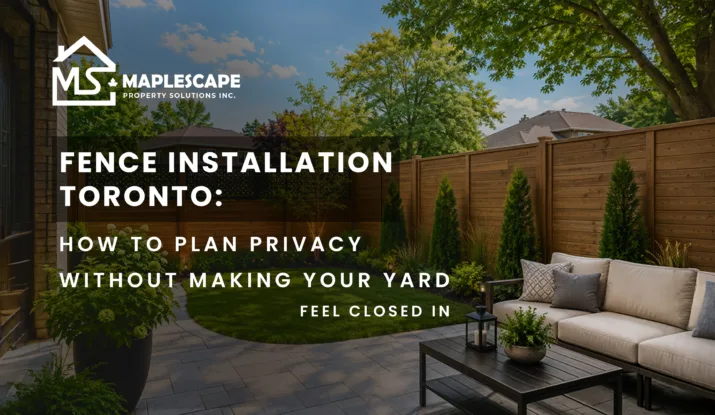
Privacy is one of the reasons homeowners add or replace a backyard fence, but more height and more solid coverage do not always create a better outdoor space. For homeowners planning fence installation Toronto, the goal should be to block the views that matter while keeping the yard comfortable, usable, and visually balanced.
A fence that is too dominant can make a compact yard feel narrower. A better plan considers where privacy is actually needed, how people move through the yard, where sunlight enters, and how the fence relates to planting, patios, gates, and neighboring properties.
1. Start by Identifying Where Privacy Is Actually Needed
Before choosing a fence height or style, stand in the parts of the yard you use most often. Look toward neighboring windows, decks, driveways, sidewalks, and nearby gathering areas.
Useful questions include:
- Which seating or dining areas need screening?
- Are upper-storey windows the main concern?
- Does a side yard need privacy or simply a boundary?
- Where should the yard remain open?
- Will a gate interrupt the privacy line?
2. Fence Installation Toronto: How Much Privacy Is Enough?
Toronto’s Fence Bylaw sets maximum heights according to fence location, property type and surrounding conditions. The city measures fence height from average grade taken perpendicular to and one meter away on either side of the fence.
2.1 Use Height Where It Solves a Real Sightline
A taller permitted fence can be useful beside a patio or backyard seating area, but the same level of screening may not be necessary along every edge.
If a shorter section already blocks the relevant view, extra height may make the enclosure feel heavier without adding meaningful privacy.
2.2 Think About Eye Level, Not Just Fence Top
Privacy is experienced in specific positions. Sit where outdoor furniture will be placed and check the view from normal standing and seated heights.
The fence should interrupt unwanted lines of sight rather than simply create the tallest possible perimeter.
3. How Can You Keep a Small Yard from Feeling Boxed In?
Small Toronto yards often need privacy and openness at the same time. The solution is usually visual balance rather than maximum enclosure.
3.1 Avoid Making Every Boundary Equally Heavy
A fully solid fence on all sides can make the perimeter feel closer. Where privacy is less important, a visually lighter treatment can help the yard feel more open.
3.2 Keep the Layout Simple
Too many changes in height, direction, panel style or decorative detail can make a compact yard feel busy. A consistent main fence with a few purposeful privacy adjustments often creates a calmer result.
4. Should You Combine Fencing with Plants for Privacy?
Plants can complement fencing when the goal is to soften a hard boundary rather than create all privacy through the fence itself.
| Privacy Need | Fence Role | Planting Role |
| Ground-level screening | Main visual barrier | Softens the fence line |
| Seasonal privacy | Defines the boundary | Adds fuller summer screening |
| Small backyard | Provides targeted coverage | Reduces boxed-in feeling |
| Patio screening | Blocks direct views | Adds texture |
| Long fence runs | Creates consistency | Breaks visual repetition |
Toronto states that hedges, shrubs and other vegetation acting as a fence are also subject to applicable height requirements, and vegetation near driveways can affect visibility rules.
5. Pay Special Attention to Driveways and Front-Yard Sightlines
Privacy should not come at the expense of required visibility.
Toronto requires fences within 2.4 meters of a driveway to use open-fence construction for at least 2.4 meters from the lot line where the driveway begins. The rule also applies to vegetation and objects placed on the fence because the purpose is to keep the view of the boulevard or highway unobstructed.
5.1 Treat the Driveway as a Different Design Zone
A solid backyard privacy treatment does not necessarily belong to the driveway. Transitioning to an open design where required can protect visibility while allowing the rest of the fence to provide more screening.
5.2 Check Gates Before Finalizing the Privacy Plan
A tall or visually heavy gate can affect sightlines and the feeling of the entrance. Consider how the gate opens, what it blocks when closed, and whether the area around it should remain visually lighter.
6. Use Privacy Where You Spend Time, Not Everywhere
One way to avoid overbuilding is to focus privacy on the parts of the yard that receive the most use.
Stronger screening may make sense around:
- a patio
- an outdoor dining area
- a relaxation zone
- a children’s play space
- a rear-facing seating area
This targeted approach can help fence installation Toronto projects feel connected to the landscape instead of turning the fence into the dominant feature.
7. What Should You Check Before Finalizing the Design?
7.1 Walk the Full Perimeter
Check changes in grade, corners, existing trees, sheds, and narrow access points. Fence height is measured in relation to grade, so changing ground levels should be considered during layout.
7.2 Review the Fence from Inside the House
Look through windows and doors that face the yard. A fence may provide strong privacy outside but feel unnecessarily dominant from a kitchen, family room or lower-level window.
7.3 Confirm Compliance Before Construction
Toronto encourages property owners to review the Fence Bylaw for applicable height, material and construction requirements. Owners seeking a design that does not comply with can apply for an exemption, although approval is not automatic.
MapleScape’s current GTA fencing guidance also treats privacy, property boundaries, material choice and local requirements as connected planning considerations.
Conclusion
A private yard does not have to feel completely enclosed. The most effective design blocks specific unwanted views while preserving light, movement, and visual space where screening adds little value.
Start with the places where people actually sit, walk, and gather. Then balance permitted fence height, panel openness, gates, driveway visibility and planting around those needs.
For homeowners planning fence installation in Toronto, a targeted privacy strategy can create a more comfortable yard without making the fence feel like the main feature. The result should feel protected where needed, open where possible, and practical for everyday use.
Frequently Asked Questions
How high should a privacy fence be in Toronto?
There is no single height for every location. Toronto’s maximum fence heights vary according to where the fence is located, so the applicable bylaw requirements should be checked before choosing the design.
Does a privacy fence have to be completely solid?
No. The amount of openness can be selected according to privacy needs and applicable rules. Some locations, particularly near driveways, specifically require open-fence construction.
How can I make a privacy fence feel less imposing?
Use screening where it is needed, keep the layout simple and soften longer fence runs with appropriately sized planting or landscape space.
Can shrubs provide extra privacy above a fence?
Plants can add screening, but Toronto also regulates vegetation that acts as a fence. Mature height, placement, and driveway visibility should be considered.
Should privacy fencing be planned before landscaping?
Ideally, the two should be considered together. Fence location affects planting space, access and views, while mature plants can change how much screening the yard needs.