
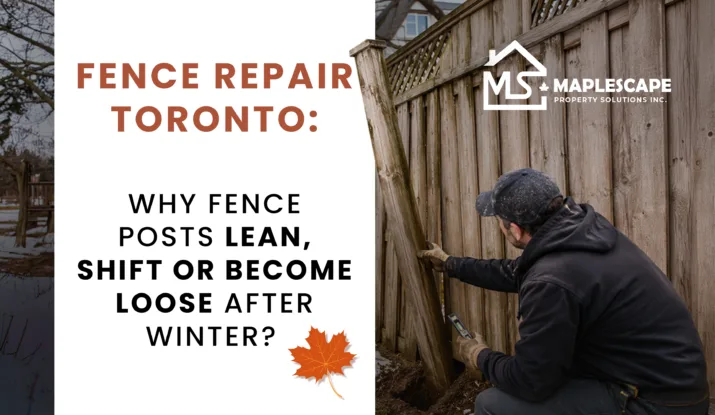
A fence can look straight in fall and noticeably different by spring. One post may lean; a gate may stop closing properly, or an entire section may appear slightly out of line. For homeowners looking into fence repair Toronto, winter damage should be assessed from the ground up rather than corrected by simply pushing the fence back into position.
Freezing soil, moisture, repeated freeze-thaw conditions and existing weaknesses around the footing can all contribute to post movement. Toronto notes that freezing soil can expand and place additional force on buried infrastructure during winter, illustrating how seasonal ground movement can affect structures below grade.
1. Why Do Fence Posts Move After Winter?
Fence posts depend on the soil and footing around them for stability. When those ground conditions change, the post can move even when the fence panels themselves are still in reasonable condition.
Ontario technical guidance recognizes frost heave as ground movement caused by freezing conditions and notes that ice formation in soil can produce significant expansion. Wet soil can also be more susceptible to frost-heaving conditions.
That does not mean every leaning fence is caused by frost. Winter may simply expose an existing weakness that was less visible during warmer months.
2. Fence Repair Toronto: What Causes Posts to Lean or Become Loose?
Several different problems can create almost the same visible symptom. Identifying the cause matters because resetting a post will not provide a lasting solution if the footing, drainage or post itself has failed.
2.1 Frost Heave Can Push the Ground Upward
Frost heave occurs when freezing conditions cause soil to expand, sometimes through the formation of ice lenses below the surface. Ontario guidance identifies frost action as capable of creating ground movement and differential loading.
If soil around a fence footing rises unevenly, the post may:
- lift slightly
- tilt away from its original position
- move differently from neighboring posts
- affect the alignment of connected panels or gates
After thawing, the soil may not settle back into exactly the same position.
2.2 Moisture Around the Footing Can Weaken Support
Water matters because fence posts rely on stable surrounding soil.
A low area that stays wet, runoff directed toward the fence line or poorly draining soil can reduce support around a post. Ontario guidance addressing frost-prone installations repeatedly recommends directing drainage away from structures exposed to frost-heave conditions.
If one post moves every spring while neighboring posts remain straight, the local ground and drainage around that footing deserve attention.
2.3 The Existing Footing May Already Be Weak
Sometimes winter is not the original cause.
A post that was installed with inadequate support, has loose surrounding concrete or has experienced years of movement may already be unstable before freezing conditions arrive. Seasonal ground movement then makes the weakness more obvious.
The correct repair depends on whether the post itself is sound and whether its footing can still provide reliable support.
3. How Can You Tell What Part of the Fence Has Failed?
Before repairing anything, inspect more than the visible lean.
| What You Notice | Possible Issue | What to Inspect |
| One post lean | Local footing or soil movement | Base, concrete and surrounding soil |
| Several posts move together | Ground movement or installation issue | Full fence line |
| Post feels loose by hand | Failed support around base | Footing and post condition |
| Gate suddenly drags | Post movement or hardware shift | Hinge post, latch post and gate |
| Panel is crooked but posts are straight | Panel or fastener issue | Rails, boards and connections |
| Wood is soft near ground | Material deterioration | Lower section of post |
This distinction can prevent unnecessary replacement. A damaged panel attached to stable posts requires a different repair from a fence whose supporting posts have moved.
4. Can a Leaning Fence Post Be Repaired?
Often, yes, but the condition of the post and footing determines the appropriate approach.
4.1 A Sound Post May Be Reset
If the post remains structurally sound but has shifted because support around it has failed, it may be possible to straighten and secure it again.
The surrounding area has to be opened enough to understand what moved. Simply pulling the top of the post straight and packing loose soil around the base may not address the actual problem.
4.2 A Damaged Post May Need Replacement
Replacement becomes more practical when the post is significantly deteriorated, cracked, or no longer capable of carrying the connected fence section.
Replacing the post also provides an opportunity to inspect the footing area and correct obvious support problems before the fence is reconnected.
4.3 Gate Posts Need Extra Attention
A small amount of post movement can become very noticeable at a gate.
The hinge and latch sides must remain aligned for the gate to swing and close correctly. If the supporting post moves, repeatedly adjusting hinges or the latch may only hide the underlying problem temporarily.
5. What Should You Inspect After Winter?
A spring fence inspection does not need to be complicated. Walk the entire fence line rather than checking only the most obvious damaged section.
Look for:
- posts that no longer appear vertical
- movement when a post is pushed gently
- gaps forming around the footing
- lifted or cracked concrete
- gates rubbing against the ground
- latches that no longer line up
- loose rails or fasteners
- boards separating from rails
- moisture collecting around post bases
- wood that feels unusually soft near ground level
Compare neighboring posts as well. One isolated failure suggests a different issue from movement affecting a long section of fencing.
6. When Is Repair Better Than Full Fence Replacement?
A leaning post does not automatically mean the entire fence needs to be replaced.
Repair is generally worth considering when the problem is concentrated in a small number of posts, and the surrounding panels, rails and remaining supports are still serviceable.
A wider replacement discussion makes more sense when deterioration is spread throughout the fence; many posts have lost stability or repairing one section would leave several other weak areas likely to need to work soon.
The decision should consider the whole fence system, not just the post with the strongest lean.
7. How Can Future Post Movement Be Reduced?
No outdoor fence can be completely isolated from changing soil and weather, but good installation and maintenance can reduce avoidable problems.
7.1 Address Water Around the Fence Line
Watch where roof runoff, melting snow and surface water travel. Persistent moisture around the same footing can make that location more vulnerable to movement.
7.2 Repair Small Movement Before It Spreads
A loose post places additional stress on connected rails, panels and gates. Correcting a localized support issue early may help prevent secondary damage to adjacent components.
7.3 Inspect the Fence Each Spring
Winter damage is easier to evaluate once frozen ground has thawed, and the fence can be checked under normal conditions.
Maples scape currently includes fence and gate repairs within its property maintenance services across Toronto and surrounding GTA communities.
Conclusion
A leaning or loose fence post after winter should not be treated as a cosmetic problem alone. Ground movement, excess moisture, weakened footings, and deterioration can all affect the stability of the fence, and the right repair depends on identifying which issue is responsible.
Inspect the post base, surrounding soil, drainage, nearby panels and gate alignment before deciding what needs to be repaired or replaced. Addressing a small problem early can also prevent additional stress from spreading through connected sections of the fence.
For homeowners considering fence repair Toronto, a proper assessment helps determine whether a post can be reset, needs replacement or is part of a wider fence issue that requires more extensive attention.
Frequently Asked Questions
Why does my fence lean after every winter?
Repeated movement may point to frost-sensitive ground, moisture around the footing, or an existing support problem. The footing and surrounding soil should be inspected rather than repeatedly straightening the top of the post.
Can frost move a fence post?
Yes. Freezing soil can expand and create upward or uneven ground movement. Ontario technical guidance recognizes frost heave as a factor that can affect buried structures and foundations.
Should I repair a loose post or replace it?
If the post is structurally sound, resetting or rebuilding its support may be possible. A deteriorated or badly damaged post is more likely to need replacement.
Why did my gate stop closing after winter?
One of the supporting posts may have shifted, changing the alignment between the hinges and latch. Check the posts before repeatedly adjusting the gate hardware.
Is one leaning post a sign the whole fence needs replacement?
Not necessarily. A localized footing or post problem may be repairable while the rest of the fence remains usable.