
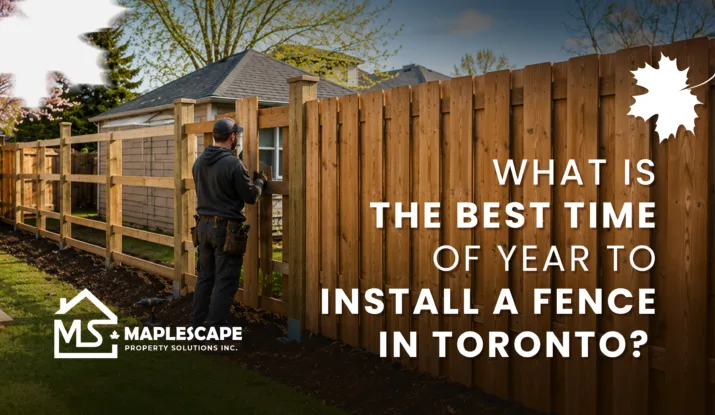
A new fence can be planned at almost any time of year, but installation depends on ground conditions, weather, access and how easily post holes can be excavated. For homeowners considering fence installation Toronto, spring through fall usually provides the most practical working window because the ground is accessible and crews can complete excavation, post setting and alignment without prolonged frozen conditions.
There is still no single best month for every property. A dry summer site may be easier to work on than a waterlogged spring yard, while early fall can offer comfortable conditions and fewer landscaping conflicts.
1. Is There a Best Season for Fence Installation in Toronto?
The most suitable period depends on the property, soil conditions, weather, fence material, and project size.
Toronto experiences freezing conditions in winter, and the City notes that low temperatures can cause soil to freeze and expand. That is one reason winter excavation can be more difficult than work completed when soil is fully workable.
For many residential projects, the practical window is:
- spring, once the ground is workable
- summer, when access is generally reliable
- early to mid-fall, before sustained freezing conditions
Planning can begin earlier. Measurements, material selection, property-line checks and utility-locate preparation do not have to wait for installation weather.
2. Fence Installation Toronto: How Does Each Season Compare?
| Season | Main Advantage | Main Limitation |
| Spring | Good time to assess the yard after winter | Wet or soft soil can delay excavation |
| Summer | Reliable access and longer working days | Heat and busy contractor schedules |
| Fall | Cooler conditions and less yard activity | Shorter window before freezing weather |
| Winter | Possible in suitable conditions | Frozen ground and snow complicate work |
Actual site conditions matter more than the calendar alone.
3. Is Spring a Good Time to Install a Fence?
3.1 Wait Until the Ground Is Workable
Early spring can still bring frozen, saturated or muddy soil. Post installation is easier when the ground has thawed enough for excavation, and the work area can support normal movement without excessive disturbance.
A yard that stays wet after snowmelt may need more time than a well-drained property.
3.2 Coordinate Fence Work with Landscaping
Spring often brings landscaping, sodding and garden work. If several projects are planned, sequence matters.
Fence work may require access through lawn or garden areas, so completing the fence before new sod or delicate planting can reduce unnecessary disturbance.
4. Is Summer the Easiest Season for Fence Installation?
Summer is often practical because the soil is accessible, daylight hours are longer, and frozen ground is not a concern.
4.1 Dry Ground Can Improve Access
Firm ground can make it easier to move materials through the property, especially where access is narrow. Very hard, dry soil can still make digging difficult, so the actual site should guide the decision.
4.2 Peak Demand Can Affect Scheduling
Summer is popular for outdoor improvement work. Homeowners with a specific completion date should plan earlier instead of waiting until the desired installation week.
Maple Scape currently includes fencing installation and repairs among its GTA property services.
5. Is Fall Too Late to Install a Fence?
No. Fall can be a practical installation period while the ground remains workable.
5.1 Early Fall Offers a Useful Window
The goal is to complete excavation and post installation before prolonged freezing conditions make the ground harder to work.
Environment and Climate Change Canada climate normals show that freezing temperatures can begin during fall in the Toronto area, although timing varies by location and year.
5.2 Do Not Rely on a Calendar Date Alone
A warm October does not guarantee suitable conditions for the entire project. Rainfall, overnight temperatures, and project size still matter.
For a larger fence, earlier fall planning provides more flexibility than trying to finish just before winter.
6. Can a Fence Be Installed in Winter?
Winter installation is possible in some situations, but it is more dependent on weather and site conditions.
Frozen soil can make post-hole excavation harder, while snow may hide grade changes and other features needed for an accurate layout. Toronto notes that freezing soil can expand during winter.
Winter work is more practical when:
- ground conditions remain manageable
- snow cover is limited
- access is safe
- the layout is already confirmed
- suitable equipment is available
7. What Should Be Done Before the Installation Date?
Season matters, but preparation often determines whether the project starts smoothly.
7.1 Confirm Layout and Access
Confirm the fence line, gate locations, delivery route and narrow access areas. Existing landscaping, sheds and exterior equipment should be considered before post locations are finalized.
7.2 Arrange Utility Locates
Ontario One Call states that homeowners building a fence must request public utility locates before excavation. For a single residential property, the request should be submitted at least five business days before digging. When a contractor performs the excavation, the contractor should obtain the location.
All affected infrastructure owners must respond before digging begins, so five business days should be treated as a minimum planning period, not a guaranteed start date.
8. How Do You Choose the Right Installation Window?
Instead of choosing a month first, compare the conditions your property actually needs.
Ask:
- Is the soil thawing and stable enough to work?
- Is the yard excessively wet?
- Will fence work interfere with new sod or planting?
- Have the property line and gates been confirmed?
- Have utility locations been arranged?
- Is there enough time before the weather changes?
For fence installation in Toronto, the strongest schedule usually provides workable ground, safe access, and enough time to complete the project without rushing.
Conclusion
Early planning also provides flexibility if weather changes unexpectedly.
The best time to install a fence in Toronto is not defined by one perfect month. Spring, summer and early fall can all work well when the ground is accessible; the site is reasonably dry, and there is enough time to complete excavation and post setting properly.
Winter can be more challenging because frozen ground and snow may complicate digging and layout, while very wet spring conditions can also require patience.
For homeowners planning fence installation Toronto, choosing the installation window around actual site conditions, utility-locate requirements and other outdoor work can make the project easier to coordinate and reduce avoidable delays.
Frequently Asked Questions
What is the best month to install a fence in Toronto?
There is no universal best month. Late spring, summer, and early fall are commonly practical, but actual ground and weather conditions should determine the final date.
Can I install a fence in early spring?
Yes, once the ground has thawed enough for excavation and the site is not excessively wet or muddy.
Is fall a good time for fence installation?
Yes. Early fall can provide workable soil and cooler conditions, but installation should be planned before sustained freezing weather arrives.
Can fence posts be installed on frozen ground?
It may be possible with suitable equipment and conditions, but frozen soil can make excavation and accurate layout more difficult.
How early should I book a fence installation?
Start planning before your preferred installation period, so there is time for scheduling, materials, and required utility locations.