
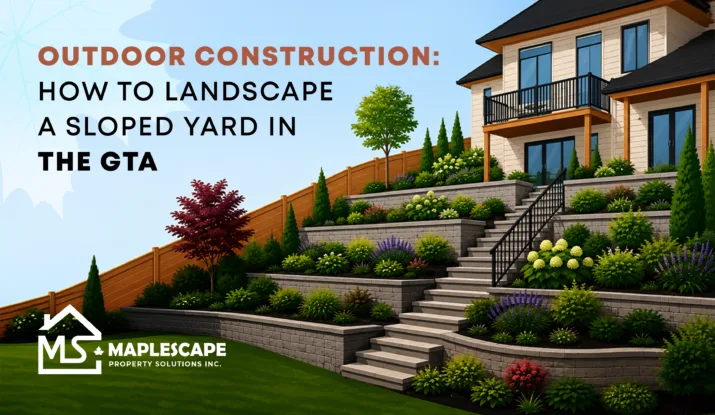
A sloped yard can create useful characters, but it can also make mowing, seating, planting, and drainage harder to manage. The solution is rarely flattening everything. A better plan works with the grade, controls movement through space and decides where level areas are actually needed.
For GTA homeowners considering outdoor construction, the first step is understanding what the slope is doing. Is water moving toward the house? Is soil washing away? Is the incline difficult to walk across? Once the problem is clear, the yard can be divided into practical zones using planting, steps, pathways, terraces, or retaining elements where appropriate.
Start With the Slope, Drainage and Existing Conditions
Before choosing materials or plants, study how the yard behaves after rain.
The City of Toronto advises homeowners to maintain grading that directs water away from foundation walls without negatively affecting neighboring properties. That makes drainage one of the first issues to review before changing grades, adding paved surfaces or creating new planting areas.
Look for water collecting near the house, exposed soil, small erosion channels, grass that stays wet, worn paths or existing walls and steps that are shifting.
Not every slope is a structural problem. Some simply need a better layout. Significant erosion, movement, or drainage near a foundation deserves professional assessment before decorative work begins.
How Can Outdoor Construction Make a Sloped Yard More Usable?
A slope becomes easier to use when the design creates a few clear destinations instead of treating the entire yard as one continuous incline.
One option is to create level or gently graded areas for specific purposes. A seating area may need a stable surface, while another section can remain planted. Steps can connect elevations more comfortably than forcing one steep path through the yard. Terraced areas may also help organize planting.
For homeowners planning outdoor construction, useful questions include:
- Where do people need to walk?
- Which part of the yard should be leveled?
- Where does runoff currently travel?
- Can planting stabilize and cover some areas instead of paying them?
- Does any proposed wall or grade change require professional design or municipal review?
These questions keep the project functional rather than purely decorative.
Use Steps and Pathways to Improve Movement
Walking straight up or down a steep lawn can be uncomfortable, especially when the ground is wet.
A defined path can create a more predictable route between the house, gate, patio, garden or lower yard. On stronger slopes, steps may be more practical than a long-inclined walkway.
Consider Terracing Instead of One Large Level Change
Terracing divides a long slope into smaller sections. Each level can serve a different purpose, such as planting, seating, or circulation.
Changing grades affects how water travels through the property and retaining structures may carry engineering or permit considerations depending on their size, location and use.
Toronto advises homeowners planning retaining walls to consult Toronto Building because some retaining-wall projects require building permits.
Plant the Slope Instead of Leaving Bare Soil
Planting can be useful where the goal is to cover exposed soil, reduce difficult mowing areas, and visually soften grade changes. The right approach depends on sunlight, soil, moisture, and how steep the area is.
Groundcovers, perennials, shrubs, and other layered planting can create coverage at different heights. Mulch may help during establishment, but it should not be expected to solve a serious erosion problem on its own.
If a slope shows active erosion or instability, planting should be part of a broader solution rather than used to hide the symptoms. TRCA’s erosion-control work across Toronto demonstrates that serious slope instability can require regrading, erosion controls and restoration planting as coordinated measures.
Keep Drainage Connected to the Landscape Plan
A sloped yard naturally directs water somewhere. Landscaping changes can alter that route.
Adding a patio, wall, pathway or other less-permeable surface may change how runoff reaches lower areas. Regrading can also redirect water toward a fence, neighboring property or structure if it is not planned carefully.
Toronto property standards require owners to manage drainage responsibly on their property.
Drainage should therefore be mapped before construction begins. The final design should consider roof runoff, existing grading, soil conditions, hard surfaces, and where water can safely move or soak into the ground.
Know When a Retaining Wall Is Actually Needed
Retaining walls can support grade changes and help create usable space, but they are not the default answer for every slope.
A gentle incline may be handled through planting, modest grading, or a path that follows the contour. A larger elevation change may require structural work, especially where the slope affects access or stability.
Wall height, location, loading, drainage behind the wall and proximity to public or accessible areas can affect design and permit requirements. Toronto’s current guidance confirms that some retaining walls require permits, so homeowners should verify requirements before construction.
If an existing wall is leaning, cracking, bulging or moving, treat it as a repair and safety question rather than simply covering it with new landscaping.
Plan for Long-Term Maintenance
Avoid narrow grass strips that are awkward to mow, planting beds that cannot be reached safely or steps that lead to areas with no clear purpose. Consider mowing access, watering, leaf cleanup and how equipment will move through the yard.
A simpler layout with defined access often works better than multiple small decorative features. Maples Scape currently offers landscape design and planning, hardscaping, garden installation and planting, seasonal landscape care and sodding across Toronto and the GTA.
Make the Slope Work with the Property
A sloped yard does not need to become completely flat to be functional. The better goal is to improve access, manage water, reduce difficult maintenance, and create level space only where it adds real value.
Planting may solve some areas, while steps, pathways, terraces or retaining elements may suit others. The right combination depends on grade, drainage, and daily use.
For GTA homeowners planning outdoor construction, a coordinated landscape plan can help ensure that structural changes, planting and water movement work together instead of creating new problems elsewhere on the property.
What is the easiest way to landscape a sloped yard?
Start by identifying drainage and access problems. Gentle slopes may work well with planting and a defined path, while steeper areas may need steps, terracing or professionally designed retaining elements.
Can I put sod on a sloped yard?
Sod can work on some slopes, but site preparation, watering, soil stability and the steepness of the grade matter. Very difficult slopes may be more practical than planted areas.
Do retaining walls in Toronto need permits?
Some do. Permit requirements depend on factors such as height, location, and accessibility. Toronto advises homeowners to consult the Toronto Building when planning a retaining wall.
How can I reduce erosion on a backyard slope?
Keep soil covered, manage runoff, and use suitable planting where conditions allow. Visible or ongoing erosion, especially near structures or steep slopes, should be professionally assessed.
Should I level my entire sloped backyard?
Usually not. Creating selected usable areas can be more practical than trying to remove every grade of change.