
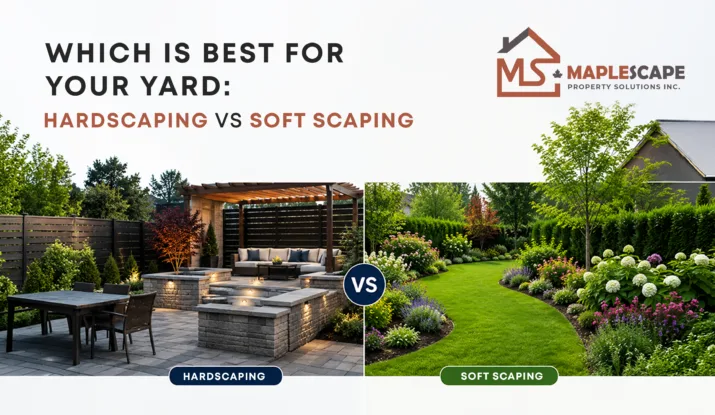
A well-planned yard needs more than attractive plants or a new patio. It needs the right balance between built features and living landscape elements. That is the difference between hardscaping and soft scaping.
For homeowners comparing Landscaping Services Toronto, understanding that balance can prevent a yard from becoming too paved, too difficult to maintain, or poorly organized. Hardscaping provides structure through patios, pathways, edging, and retaining features. Soft scaping adds lawns, trees, shrubs, perennials, and garden beds.
Neither is automatically better. The right choice depends on how the property is used, how water moves through it, how much maintenance you want, and which areas need stronger function.
What Is Hardscaping?
Hardscaping refers to non-living landscape features that create structure, access, or usable outdoor surfaces. Common residential examples include patios, walkways, steps, stone borders, retaining features, and other durable materials. Toronto’s landscape standards similarly distinguish hard surfaces such as walkways and courtyards from soft landscaping.
Useful hardscape can solve practical problems:
- Patios create stable space for seating or dining.
- Walkways improve movement between doors, gates, sheds, and outdoor areas.
- Edging helps define lawns, beds, and gravel areas.
- Steps and level changes can improve access where the property has elevation differences.
- Retaining elements may help organize changes in grades that are professionally designed for the site.
Hardscaping works best when each feature has a clear purpose.
What Is Soft scanning?
Soft scaping covers the living parts of a landscape, including turf, trees, shrubs, perennials, ornamental grasses, groundcovers and planted garden areas.
These elements can add privacy, shade, seasonal interest, and visual depth. Plant selection should account for mature size, sunlight, moisture, and maintenance.
Toronto’s native plant guidance notes that native plants are adapted to local conditions and can be resilient when matched to an appropriate site.
How Do Landscaping Services Toronto Balance Hardscaping and Soft scaping?
The strongest landscape plans usually begin with function rather than a fixed hardscape-to-softscape ratio.
Start by asking what each part of the yard needs to do. A frequently used route may need a walkway. A seating area may need a patio. A boundary may need planting for privacy. A shaded corner may suit groundcover better than a turf.
Professional planning also looks at how these parts connect. A large patio with no planting can feel harsh, while a heavily planted yard without clear paths may be difficult to use.
Good Landscaping Services Toronto should therefore consider structure, planting, drainage, access and maintenance as one connected system rather than separate upgrades.
A useful planning sequence is to mark circulation first, then identify seating, drainage concerns, lawn areas, and planting zones. This prevents decorative choices from interfering with movement or creating awkward leftover spaces. It also makes future maintenance easier to predict because each feature has a clear role. That clarity matters more than following a fixed design trend or trying to maximize either paving or planting.
When Should You Add More Hardscaping?
More hardscapes may be useful when the property has circulation or usability problems.
Consider more hardscaping when:
- people regularly walk through the same muddy or worn route
- outdoor furniture needs a stable base
- lawn and garden edges are difficult to maintain
- the yard has uncleared functional zones
- existing paved surfaces are damaged or poorly placed
The goal should be to improve use, not simply reduce the amount of grass.
A patio that provides seating space or a pathway that solves a circulation problem has a clear purpose. A large, paved area with no defined use may simply reduce planting space and create another surface that requires upkeep.
When Should You Add Softer scaping?
Soft scaping becomes more valuable when the yard needs shade, screening, seasonal interest, or a softer transition between built features.
Planting can soften fences and patios while improving privacy and visual connection.
Toronto promotes native planting, rain gardens, groundcovers and other alternatives to conventional turf as part of sustainable landscaping.
Softer scaping may make sense when:
- the yard feels dominated by paving
- privacy is limited
- unused lawn is difficult to maintain
- certain areas need shade or visual screening
- garden beds could improve how different spaces connect
Planting should still suit the actual conditions. A plant chosen only for appearance may struggle if the location receives the wrong amount of sunlight or moisture.
How Does Drainage Affect the Decision?
Drainage should be considered before new hard or soft landscape features are installed.
The City of Toronto recommends increasing soft surface landscaping where possible and considering permeable surfaces when hardscape is required. It also identifies rain gardens as one option for absorbing and filtering stormwater in suitable locations.
If water regularly collects in one section of the yard, first understand why. The issue may involve slope, compacted soil, or runoff from hard surfaces. A landscape plan can then determine whether the area needs planting, improved infiltration, another surface or professional assessment.
This is particularly important around foundations and other structures, where drainage concerns should be treated as a functional property issue rather than covered with decorative landscaping.
Which Is Easier to Maintain?
Hardscape is not maintenance-free, and softscape does not have to be labor-intensive.
Patios and paths may need cleaning, joint maintenance, and occasional repair. Lawns require mowing, while shrubs and garden beds may need pruning, weeding, and seasonal cleanup.
The easiest yard to maintain is usually the one with fewer unnecessary transitions and better-planned materials.
Tiny lawn strips, overcrowded beds and oversized patios can all create avoidable maintenance.
Maintenance should therefore be considered during design, not after installation. Homeowners should think about mowing access, garden-bed spacing, leaf cleanup, watering needs, and how easily hard surfaces can be maintained before choosing the final layout.
What Balance Works Best for Toronto Homes?
There is no ideal percentage of hardscape and softscape for every residential property.
A small urban backyard may work well with one compact patio, narrow boundary planting, and little or no lawn. A larger suburban property may need an open lawn, shade of trees, garden beds, a walkway, and a dedicated seating area.
The right balance depends on:
- how much outdoor space is available
- how the household uses the yard
- where privacy or shade is needed
- how water moves across the property
- how much regular maintenance is realistic
- whether future changes are likely
MapleScape currently provides landscape design and planning, hardscaping, garden installation and planting, seasonal landscape care and sodding across Toronto and the GTA. These services can be coordinated when a property needs both structural and planted improvements.
Build the Yard Around How You Use It
Hardscaping and soft scaping should support each other. Patios and pathways create structure, while lawns, trees and planting make the yard more comfortable and visually balanced.
The best plan is not the one with the most features. It is the one that solves access, drainage, privacy, and maintenance needs without creating unnecessary work.
For homeowners planning larger outdoor changes, Landscaping Services Toronto can help coordinate hardscaping and soft scaping as one complete property plan, so each improvement works with the rest of the yard instead of competing with it.
Frequently Asked Questions
Is hardscaping better than soft scaping?
No. Hardscaping provides structure and usable surfaces, while soft scaping adds living elements such as lawns, shrubs, and gardens. Most yards benefit from a practical combination of both.
Does hardscaping reduce maintenance?
It can reduce mowing or planting work in the area it replaces, but patios and pathways still require cleaning, inspection, and occasional maintenance.
Can a small backyard include both?
Yes. A small yard can combine one useful hardscape area with narrow planting beds, privacy planting or groundcovers without feeling crowded.
Should hardscaping be installed before planting?
Usually, structural work is coordinated before final planting, so new garden areas are not disturbed during construction.
How do I know what my yard needs?
Start with the function. Identify where people walk, sit, gather, need privacy, experience drainage problems, or struggle with maintenance.